A PROJECT FOR THE AGES
By David Levering Lewis
Historian at New York University and two-time Pulitzer Prize–winning biographer of W.E.B. Du Bois
On February 15, 1961, a few days shy of his ninety-third birthday, William Edward Burghardt Du Bois received a cable from President Kwame Nkrumah informing him that the Encyclopedia Africana project had been ‘accepted and endorsed by the Ghana Academy of Learning. Substantial financial support has been voted.’ The Du Boises began preparations for relocation to Africa before the end of the year. Du Bois’s vision carried him past the desegregation of lunch counters and high schools and beyond the cruel dilemma of giving thanks ‘for partial equality’ to a better world trying to be born outside the folds of rapacious capitalism. That world he and his partner and wife Shirley Graham were now resolved to join in order to make what contributions they could. In one of his last jeremiads before exiling himself to Ghana, Du Bois called for the restoration of democracy in America. ‘Make it again possible for the people to express their will,’ he had implored. ‘Today the rich and the powerful rulers of America divide themselves into Republicans and Democrats in order to raise ten million dollars to buy the next election and prevent you from having a third party to vote for, or to stop war, theft and murder by your votes.’

On October 1, 1961, Du Bois departed immediately with his wife for Nkrumah’s Ghana. “Today, I have reached a firm conclusion,” he stated. “Capitalism cannot reform itself; it is doomed to self-destruction.” (Of course, that is yet to be proven.) The republic of twelve million was the lodestar of a continent appearing to be on its way to prosperity in unity as he and Shirley departed. “We come to witness the last (or the first?) of a great world drama,” mused Du Bois in ‘Pan-Africa: The Story of a Dream,’ a memoir he would begin after only a month in the new nation.
A large home in Accra’s most exclusive neighborhood was placed at their disposal, along with a gift of a Russian Chaika limousine. That residence would become a place of pilgrimage instantly, drawing Mohammed Ben Bella of the Algerian Front de la Libération Nationale to Cantonments Road in a votive train of third world figures, international peace partisans, would-be revolutionaries, black American militants, and an endless procession of students from the University of Ghana and abroad.
Here at long last was the scholastic epicenter where, with loyal Alpheus Hunton and Ghana Rhodes Scholar Fifi Hesse and the well-funded Ghanaian secretariat, this great militant intellectual’s dream of the Encyclopedia Africana was to be consummated. The time has come to build the great library and research center and to complete The Encyclopedia Africana. October 1st 2026 marks sixty-five years since W.E.B. Du Bois and Shirley Graham Du Bois departed from the United States of America for Cantonments Road, Accra, Ghana.
I was in Accra, Ghana in 1985 when the current W.E.B. Du Bois Memorial Centre for Pan-African Culture was being built, and I saw the exhumed body of Dr. Du Bois being transported from the Castle to the converted Tomb in Cantonments Osu. In August 2023, I went to Accra, Ghana, as a Special Guest at the 60th anniversary commemoration of the passing of Dr. Du Bois on August 27, 1963. We went into the Tomb and laid a wreath along with other guests, including Aldon Morris, Northwestern University, Whitney Battle-Baptiste, Director of the W.E.B. Du Bois Center at UMass, and Karcheik Sims-Alvarado, Morehouse College. Later in the day, we all had the pleasure of meeting with then-President Nana Akufo-Addo at Jubilee House. In our meeting with the President, we all pleaded with him to instruct his officials to conclude the Agreement with the W.E.B. Du Bois Museum Foundation for the redevelopment of the dilapidated Centre.
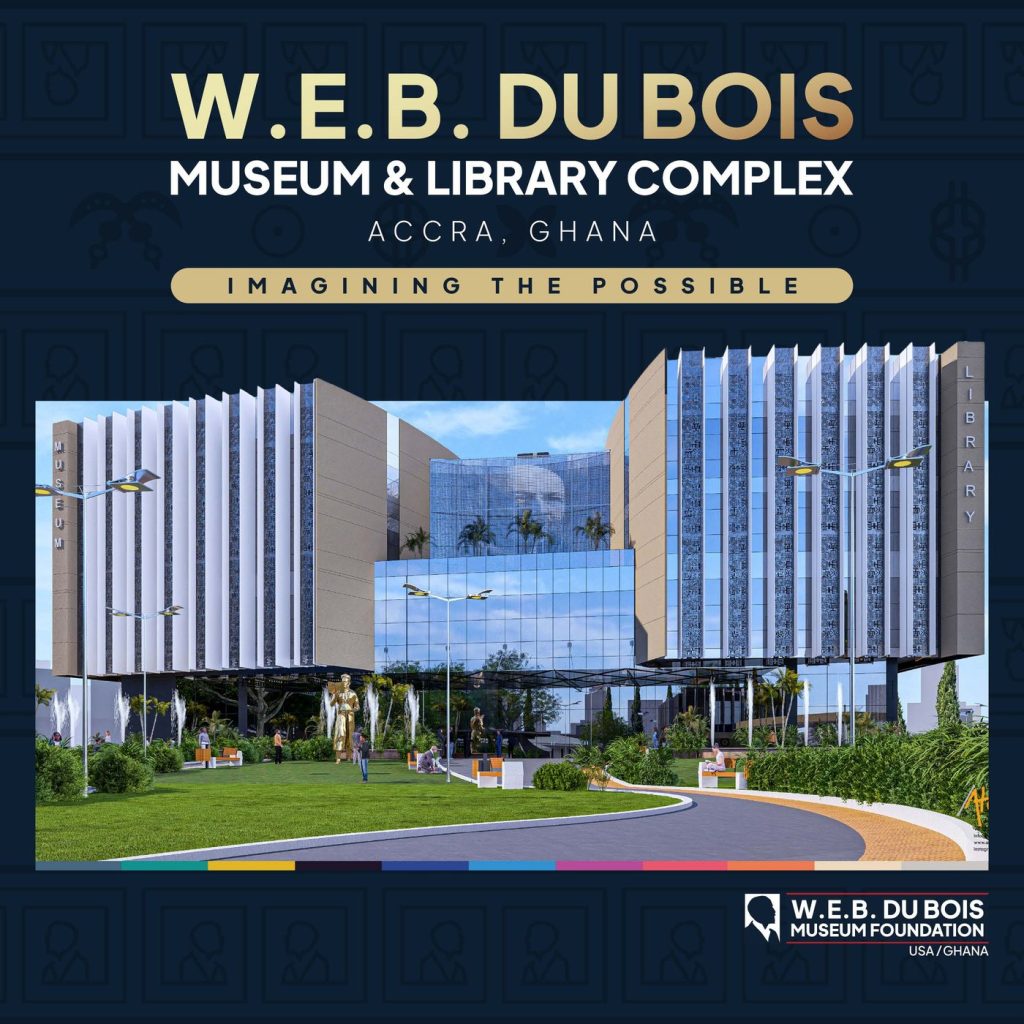
The President heeded our call, and in September 2023, on the margins of the United Nations General Assembly in New York, the government of Ghana signed an Agreement with the Du Bois Museum Foundation for the redevelopment of the Centre. And it is a great joy to know that the government of current President John Mahama has honored that agreement after minor modifications, paving the way for the start of the redevelopment project that will include a Mausoleum, Museum, Library, Amphitheater, and a 50-room scholars’ residence. May we live to see this project come through.
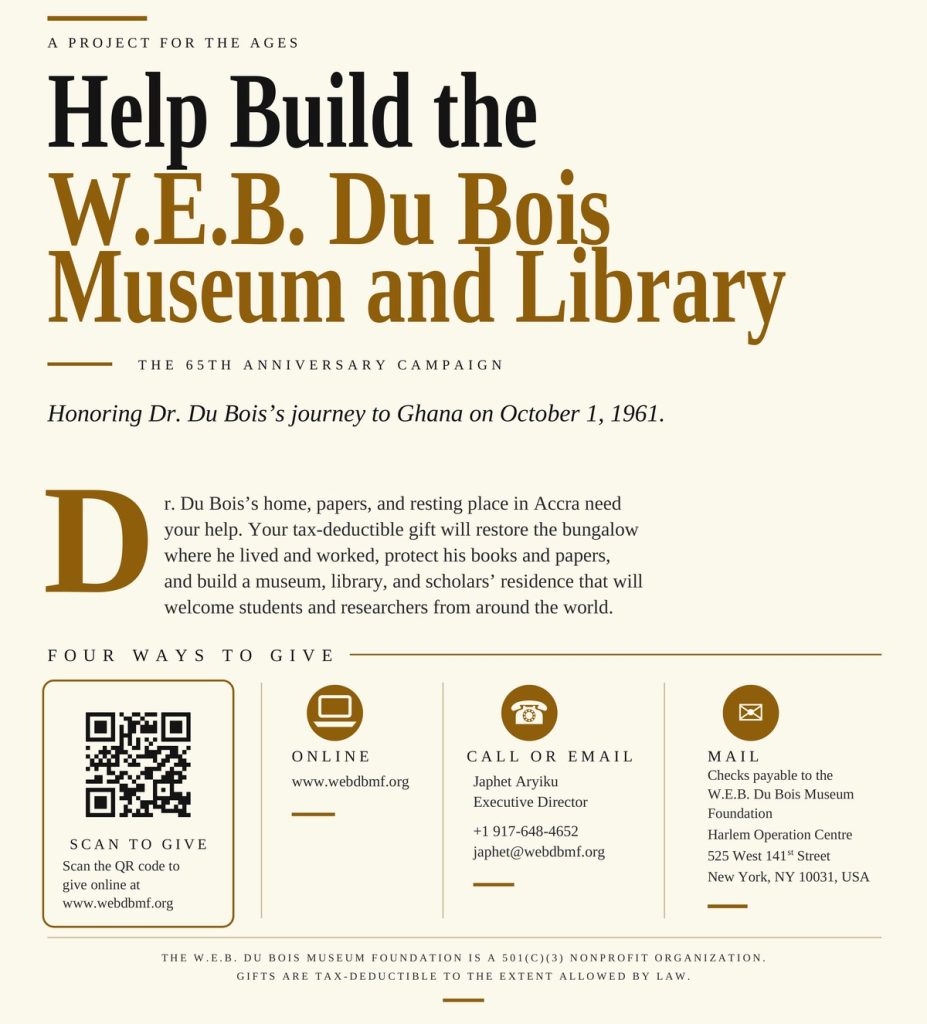
Please help us with your generous tax-deductible donations at the website: www.webdbmf.org and/or contact the Executive Director, Mr. Japhet Aryiku, at +1 917-648-4652 (japhet@webdbmf.org).
About the Author
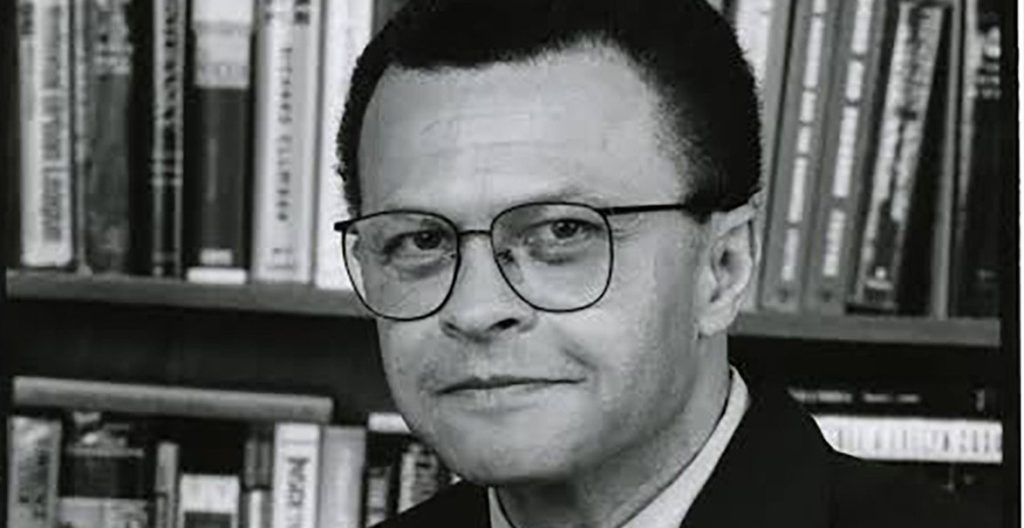
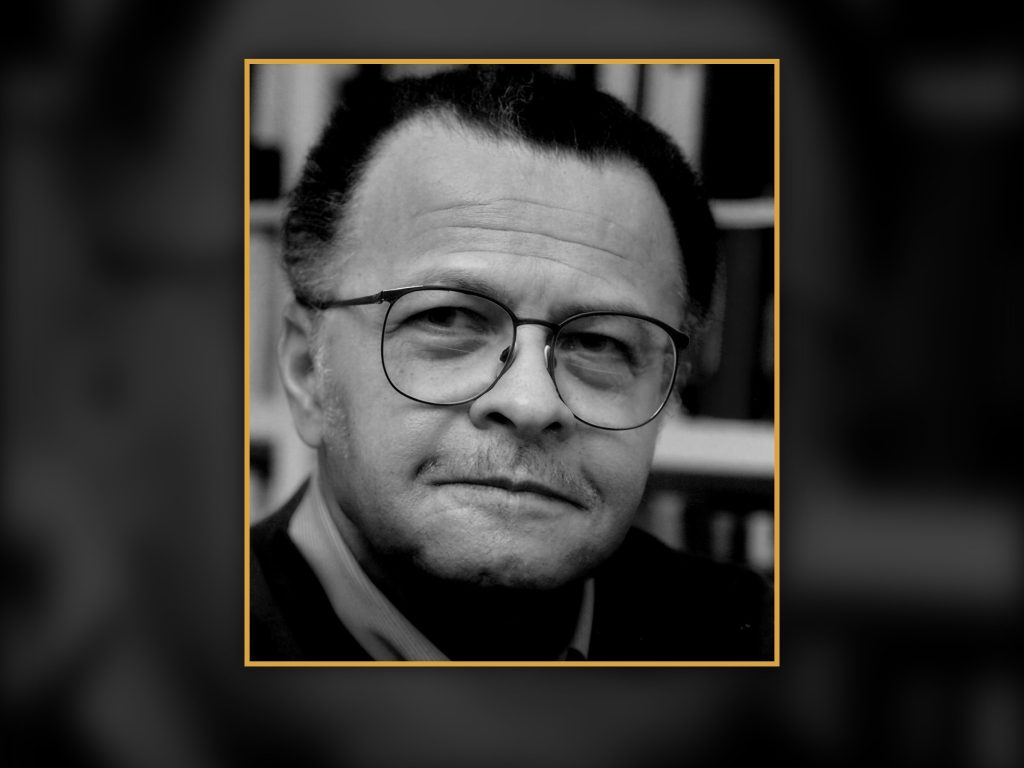
David Levering Lewis is a historian at New York University and the foremost biographer of W.E.B. Du Bois. Born in Little Rock, Arkansas, in 1936, he entered Fisk University, Du Bois’s own alma mater, at fifteen, then studied at Columbia and earned his doctorate at the London School of Economics. His When Harlem Was in Vogue remains a defining history of the Harlem Renaissance, the flowering Du Bois helped nurture as editor of The Crisis. His two-volume life of Du Bois, W.E.B. Du Bois: Biography of a Race, 1868–1919 and W.E.B. Du Bois: The Fight for Equality and the American Century, 1919–1968, won the Pulitzer Prize for Biography twice, along with the Bancroft and Parkman Prizes, and in 2010 President Barack Obama awarded him the National Humanities Medal. Having witnessed Du Bois’s reinterment in Accra in 1985 and returned in 2023 to urge Ghana’s president to redevelop the Centre, he now lends his scholarship and his voice to the W.E.B. Du Bois Museum Foundation’s plans for a Mausoleum, Museum, Library, and scholars’ residence on the site where Du Bois spent his final years.
Help Build the W.E.B. Du Bois Museum & Library
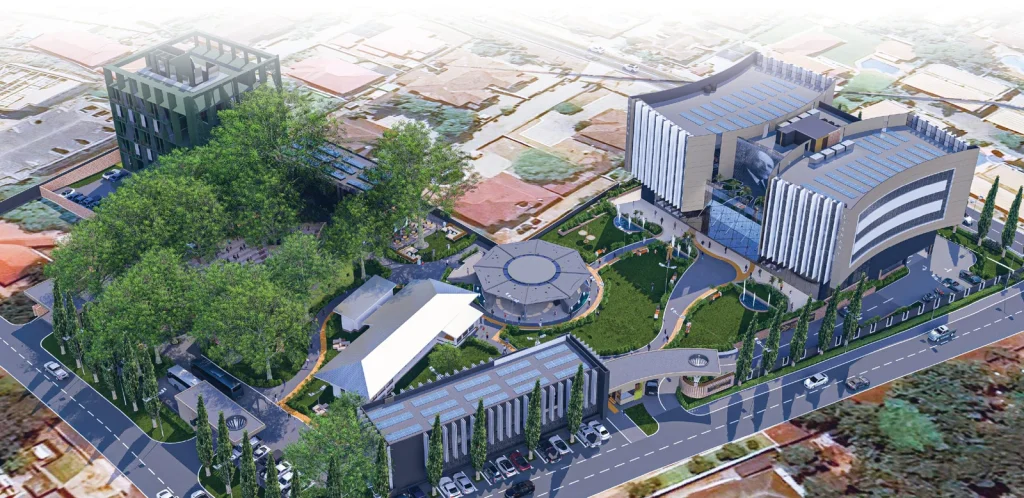
Full Layout of the Museum
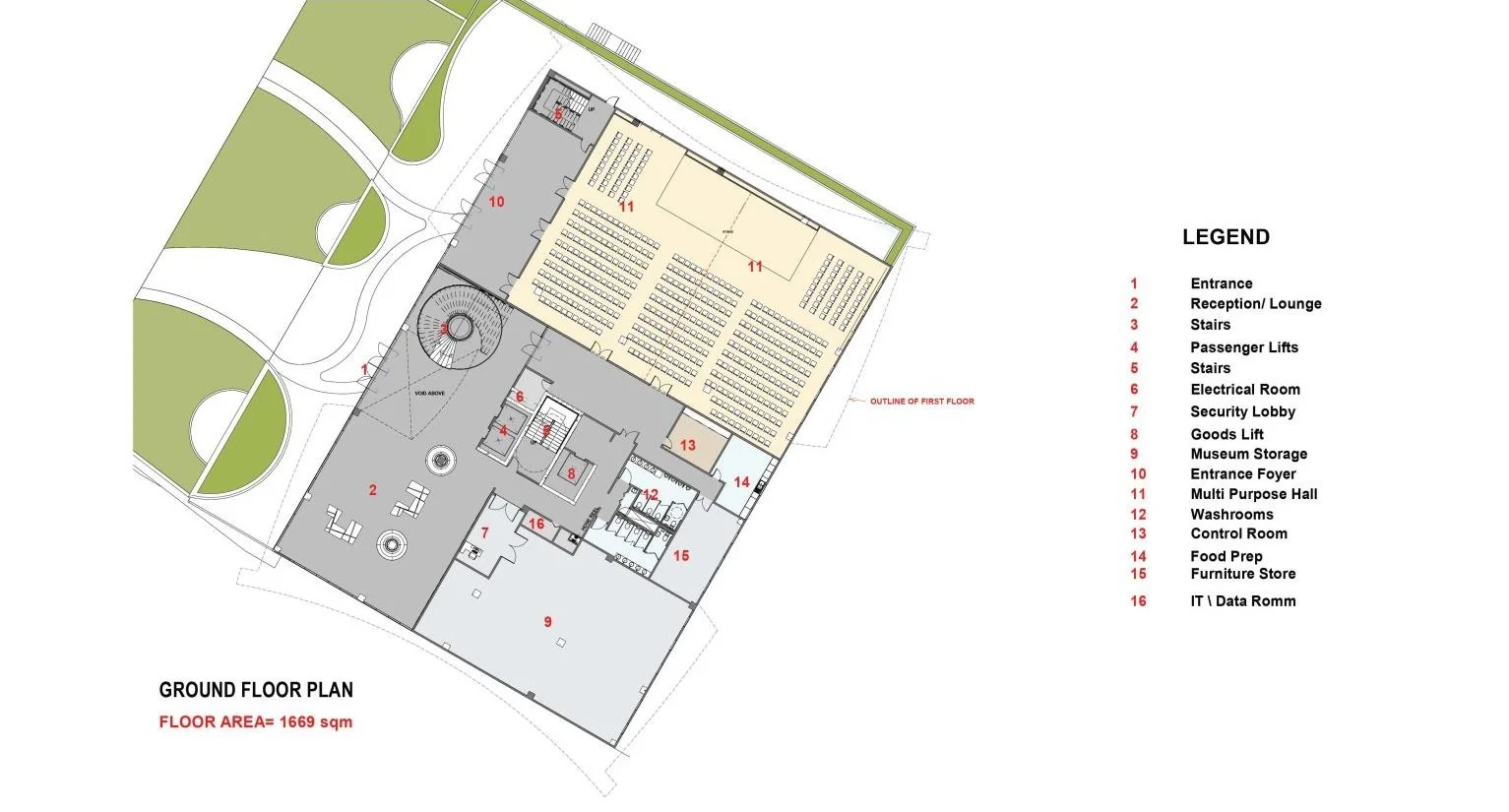
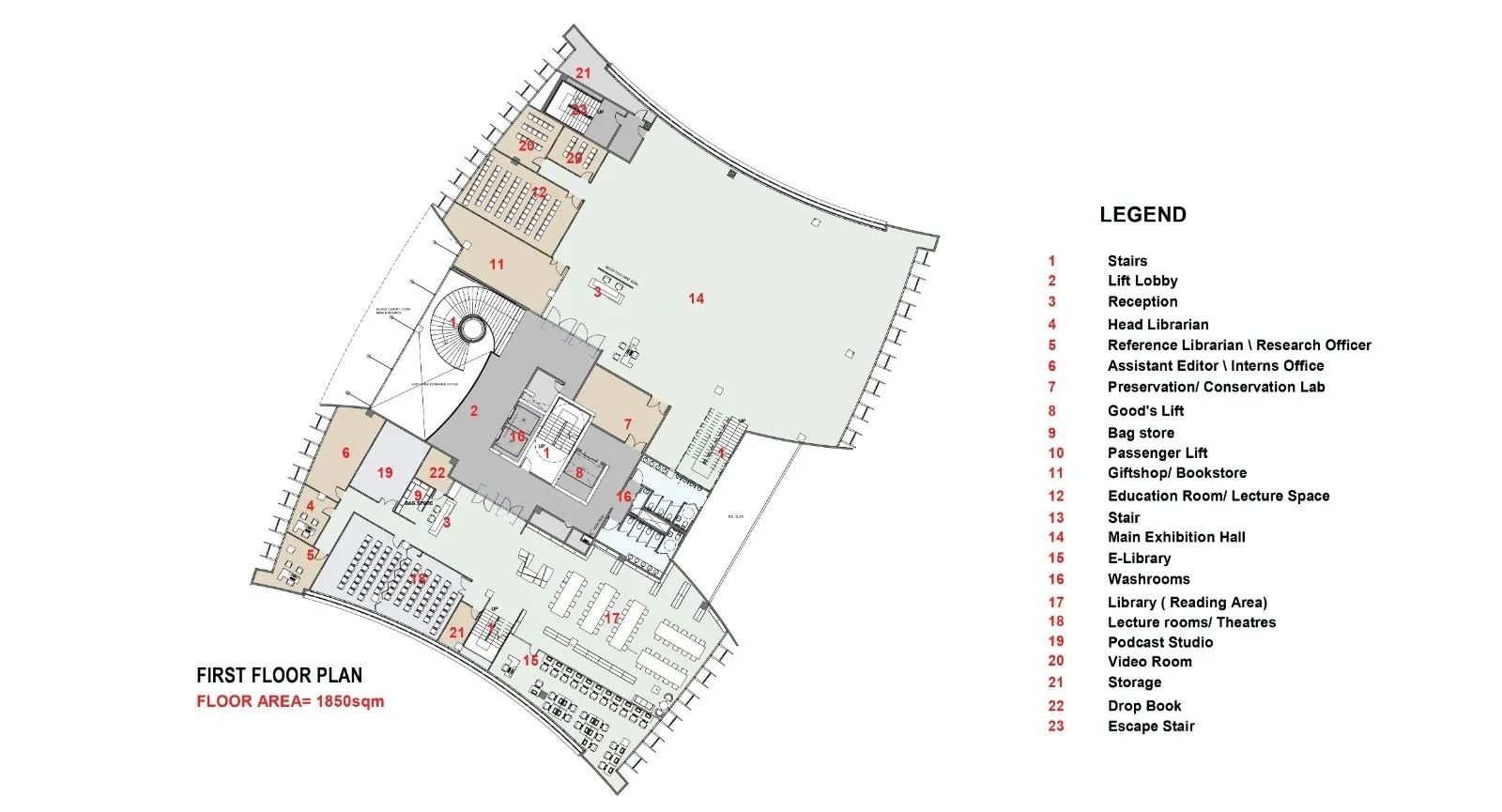
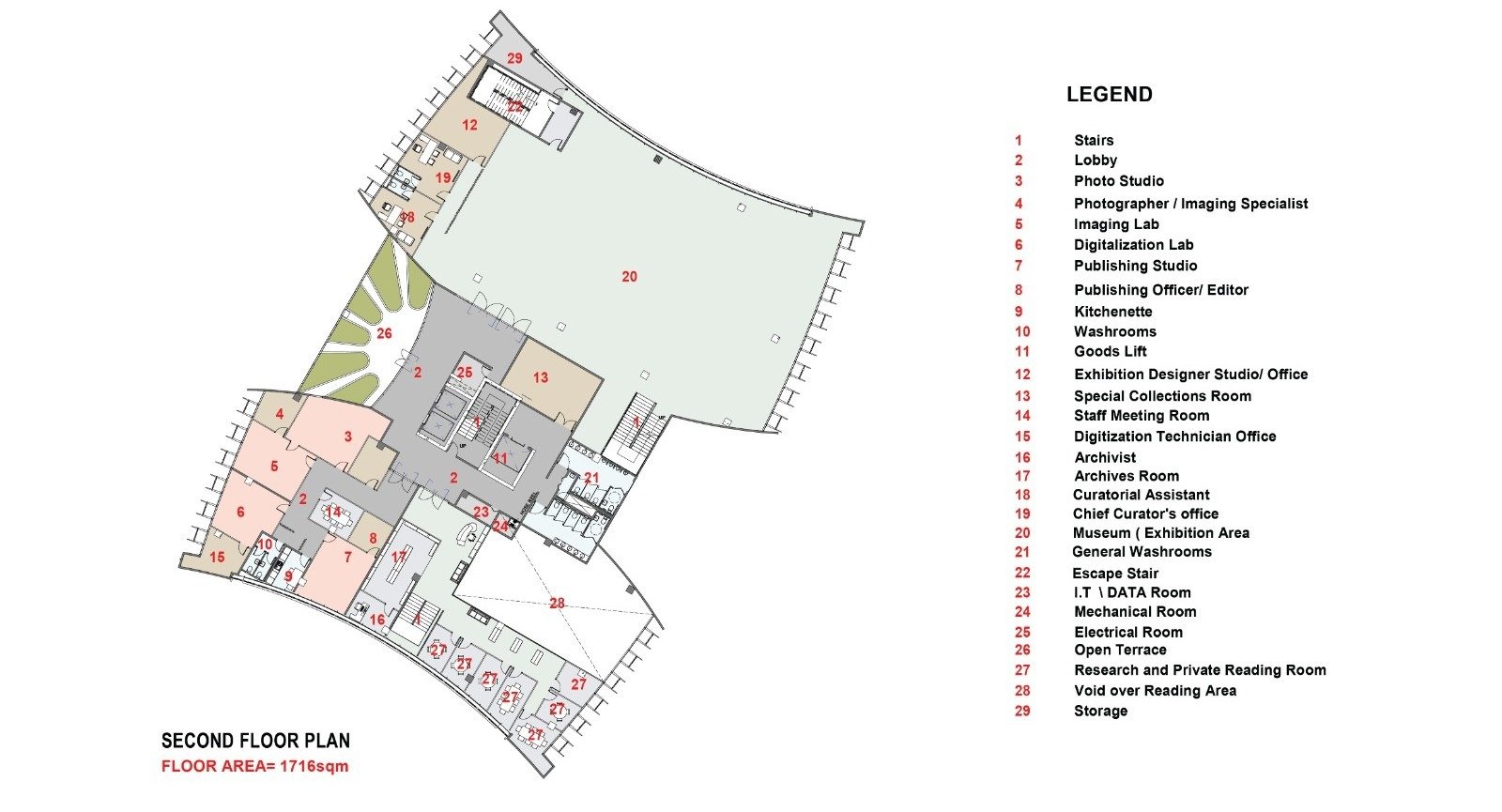
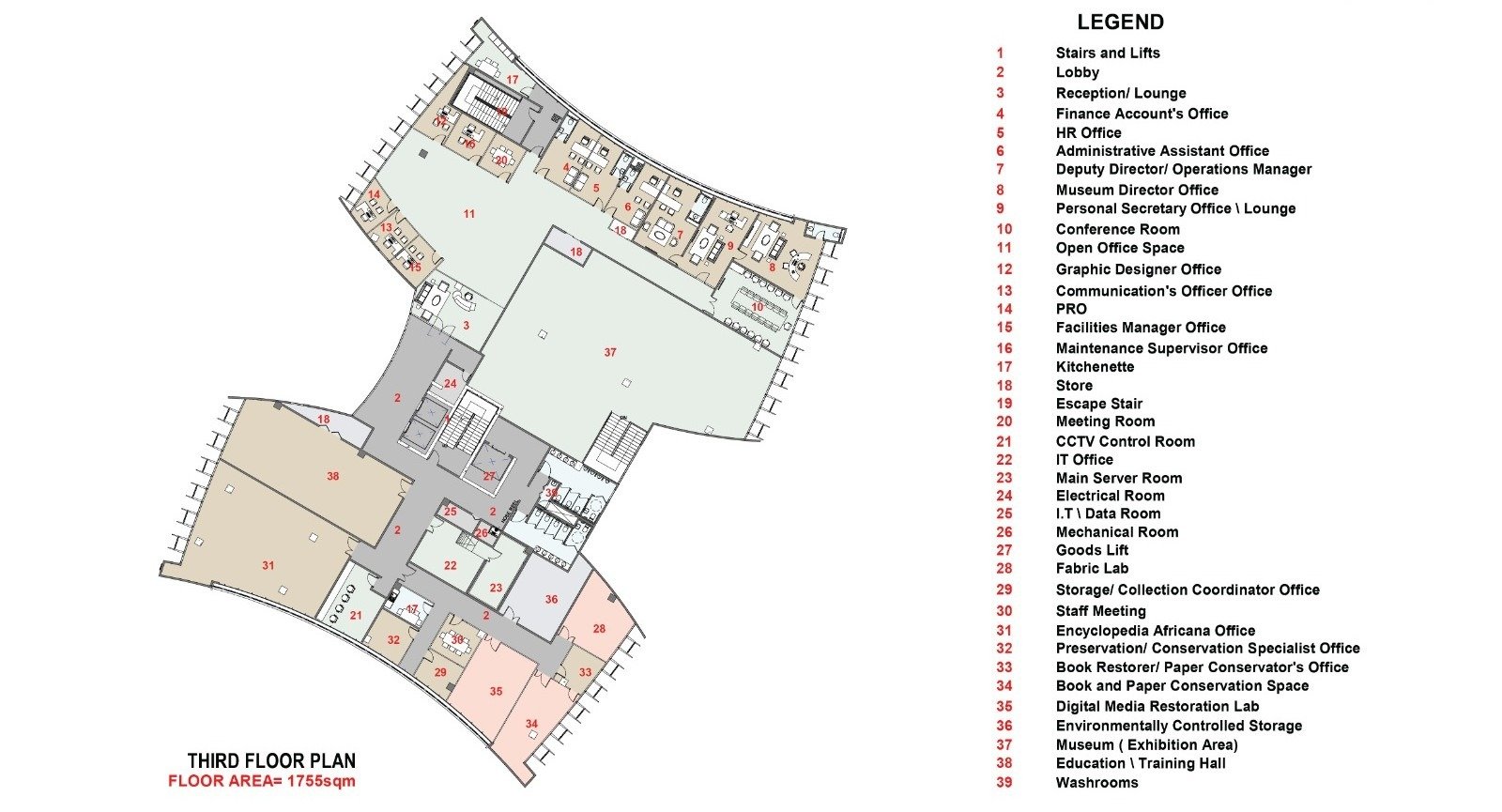
The W.E.B. Du Bois Museum & Library Complex will rise on nearly four acres at the Du Bois Centre in Cantonments, Accra: a restored Bungalow, a new Mausoleum, a Museum, a Library, a Welcome Center, an Amphitheater, underground parking and a 50-room Scholars Residence. Renderings and floor plans courtesy of the W.E.B. Du Bois Museum Foundation.