
Africa Shaping
Tomorrow
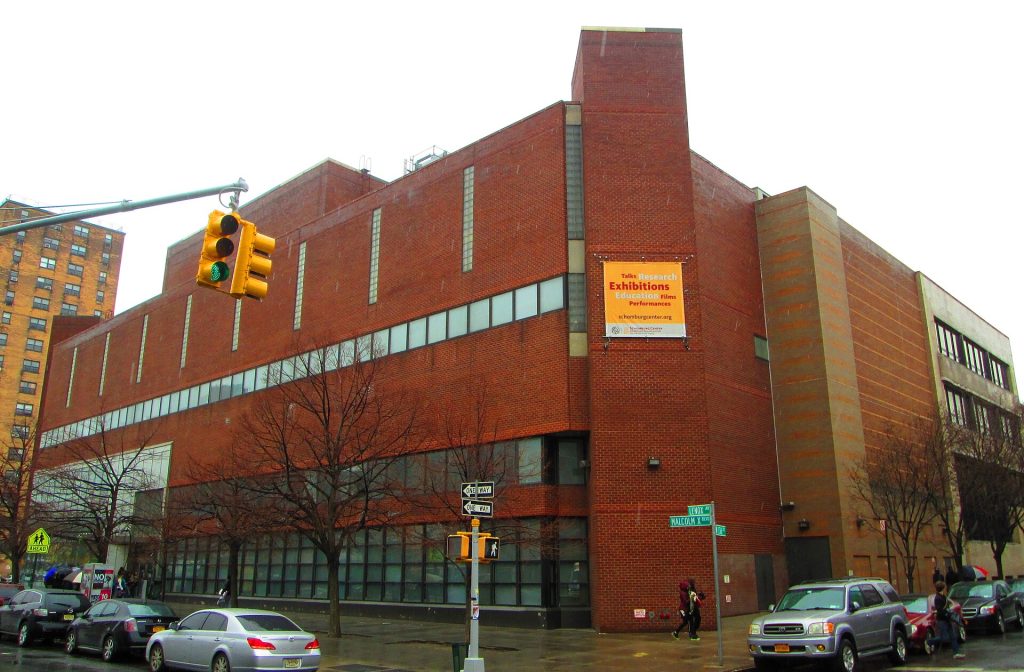
Arturo Schomburg was a boy in Puerto Rico when a teacher told him that people of African descent had no history worth learning. He spent the rest of his life proving the teacher wrong, one book, one letter, one print at a time, and the collection he gathered became the Schomburg Center for Research in Black Culture, now in its second century on 135th Street.
This month, the question he was answering turns toward the future. On November 19 and 20, the American Geographical Society, founded in New York City in 1851 and celebrating its 175th anniversary, brings its annual Geography 2050 symposium to the Schomburg under the title Africa Shaping Tomorrow. More than forty speakers, many of them African and diaspora scientists, ministers, investors and diplomats, will spend two days on food, health, biodiversity, money, maps and power, and on who gets to decide what the continent becomes.
The setting matters. By 2050, Africa is expected to be home to roughly one in four people on Earth. The conversation about that future is coming to the neighborhood that, for a century, has insisted Africa’s past belonged on the shelf next to everyone else’s.
“Until the lion learns to write, tales of the hunt will glorify the hunter.”
African proverbIn their wordsWhy Harlem, why now
AGS told The Harlem Times it chose the Schomburg because Harlem has long been a center of Black intellectual life and of the ties between Africa and its diaspora, and the center’s legacy makes it a fitting home for the conversation.
The Society said it wants to challenge the way Africa is usually discussed, through its problems rather than its intellectual capital, innovation and leadership. In its words, Africa is “a place where the future is being imagined, researched, developed, and led.”
It hopes New Yorkers and the diaspora leave with a deeper sense of Africa’s geographic significance and stronger links between the continent and its people abroad.
That is the challenge the symposium sets itself, and it is one The Harlem Times shares. Our Africa Is Rising coverage has followed the new skylines of Addis Ababa and Lagos; this gathering asks the harder question underneath the skylines: who will grow the food, guard the forests, write the science and hold the purse strings?
Program at a glanceTwo days at the Schomburg
Thursday, Nov 19
- 12:45 PMWelcome, overview and a poetry readingDr. Dee Jordan, conference chair; poet D.M. Aderibigbe
- 1:05 PMThe African Exposome: keys to healthy socioecological systemsJohn Amuasi, KNUST / Lancet One Health Commission
- 1:40 PMThe Stakes of 2050: What Africa’s Food Leaders Know That Others Don’tAgnes Kalibata and Ndidi Nwuneli, moderated by Catherine Nakalembe
- 2:30 PMDecolonizing African AgricultureWilliam Moseley, interviewed by Moses Kansanga
- 2:50 PMBuilding Africa’s Food Systems at ScaleRockefeller Foundation, Hagush; moderated by Niwaeli Kimambo
- 3:55 PMLightning talks: AI, mining, blue carbon, eco-gentrification
- 4:35 PMThe Future of Biodiversity Conservation in AfricaGEF, National Geographic, NASA/MIT, Conservation International and Angola’s UN mission
- 5:30 PMWelcome reception
Friday, Nov 20
- 8:50 AMGenealogy as Spatial Intelligence: Mapping Black MobilityAndré Kearns, Black Ancestries
- 9:15 AMAfrica’s Growing, Youthful and Mobile PopulationModerated by AGS President Marie Price
- 10:45 AMInvesting in Africa’s Tomorrow: Capital, Innovation and African AmbitionNnamdi Igbokwe and Nthanda Manduwi; moderated by Hiba Said
- 11:25 AMWhere Health Happens: Reimagining Africa’s Health FutureModerated by Dee Jordan
- 12:55 PMBeyond the Map: Geospatial Innovation for DevelopmentCSIR, The HALO Trust, Engineers Without Borders, Esri
- 1:55 PMAfrica as an Emerging Global Political LeaderMojúbàolú Okome and others
- 2:55 PMAfrica Leading Its Own Science by 2050Emmanuel Peprah, NYU
- 4:35 PMThe 2050 Test: Why Global Institutions Must AdaptDeliwe Rene Phetlhu, University of the Free State
The voicesWho is drawing the map
Backgrounds below are compiled by The Harlem Times from public institutional profiles. The questions at the foot of each card are ours, put to the speakers through AGS. As they answer, their replies will appear here, clearly marked as theirs.
Dr. Dee Jordan
A health geographer who maps the ecology of vector-borne and neglected tropical diseases in sub-Saharan Africa. She founded AGS’s Advancing Geography Through Diversity program.
Dr. Agnes Kalibata
Former Rwandan agriculture minister and president of AGRA (2014–2025); UN Special Envoy for the 2021 Food Systems Summit. Born in Rwanda, she grew up a refugee in Uganda.
Ndidi Okonkwo Nwuneli
Nigerian entrepreneur and former president and CEO of the ONE Campaign, its first African leader. Founder of LEAP Africa and author of Food Entrepreneurs in Africa.
Dr. Catherine Nakalembe
Ugandan geographer who uses satellites to forecast harvests and droughts. Winner of the 2020 Africa Food Prize; TED Fellow and National Geographic Explorer.
Dr. William Moseley
Geographer, former Peace Corps volunteer in Mali and author of Decolonizing African Agriculture (2024), a leading critic of Green Revolution approaches.
Prof. John Amuasi
Ghanaian global health scholar who studies where human, animal and environmental health meet; adviser to WHO and Africa CDC.
Dr. Mohamed Bakarr
Sierra Leonean ecologist who leads GEF’s integration and knowledge work; formerly senior vice president at Conservation International.
Kerllen Costa
Angolan ethnobiologist from Luanda who leads river expeditions in the Okavango headwaters; 2024 National Geographic Wayfinder Award.
Dr. Lola Fatoyinbo
Maps mangroves and Africa’s carbon-rich wetlands from space; Presidential Early Career Award recipient.
Ambassador Mateus Luemba
A veteran Angolan diplomat who advised five UN General Assembly presidents on Africa and peacekeeping.
André Kearns
Genealogist and former AWS executive who traced his family to some of the earliest Africans in colonial Virginia; author of Finding Cornerstone Stories.
Dr. Mojúbàolú Okome
Nigerian-born political scientist, founder of the journal Ìrìnkèrindò on African migration, and a CFR Education Ambassador.
Nthanda Manduwi
Malawian entrepreneur based in Manhattan, founder of the Ntha Foundation, and a former UNDP evaluation specialist.
Dr. Nnamdi Igbokwe
Political economist leading blended-finance work at Columbia SIPA; formerly at the World Bank, the African Development Bank and Citigroup.
Hiba Said
Program officer in the foundation’s international program, with a background in African peacebuilding scholarship.
Dr. Emmanuel Peprah
Implementation scientist and former NIH official who helped launch the H3Africa genomics initiative.
Prof. Deliwe Rene Phetlhu
South African nursing scholar and vice-chair of the South African Nursing Council; she closes the symposium on how global institutions must adapt.
Sives Govender
Leads spatial information systems research at South Africa’s Council for Scientific and Industrial Research and organizes the AfricaGIS conference.
Readers may know the brass-and-terrazzo cosmogram set into the floor of the Schomburg’s Langston Hughes lobby, named for the poem Hughes published in 1921. “My soul has grown deep like the rivers,” he wrote. On November 19 the rivers come back to 135th Street: the Okavango, the Niger, the Nile, and the rivers of money, data and talent that will decide the next quarter-century.
How to be in the room
- The symposium is open to the public; advance registration is required at geography2050.org, with fees that vary by attendee category.
- New York City students can apply for a limited $50 student rate; nonprofit staff can ask AGS (ags@americangeo.org) about a $100 individual rate.
- The Harlem Times plans to cover both days. Watch this page for the speakers’ answers, photographs and our full report.
Sources and attribution. Program details and the passages marked “From the American Geographical Society” come from AGS’s communications with The Harlem Times (November 6–7, 2026) and the published symposium program. Speaker backgrounds are summarized by The Harlem Times from public institutional profiles. All other text is by The Harlem Times. Schomburg Center history: New York Public Library.
Share this preview and tag us @HarlemTimesNews on X and @theharlemtimes on Instagram.