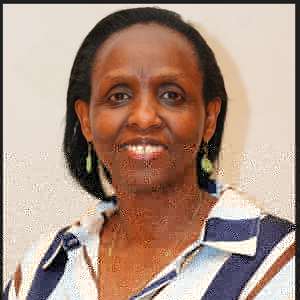
In the Rwandan village where Dr. Agnes Kalibata grew up, land paid the school fees, fed the cows and supplied the medicine. Decades later, as a minister, the head of AGRA and the leader of a United Nations summit, she has argued that Africa can feed itself.
Dr. Kalibata, chair of C4Impact Advisory, received the American Geographical Society’s Alexander & Ilse Melamid Medal, which honors the relationship between people and natural resources, this month at Geography 2050: Africa Shaping Tomorrow at the Schomburg Center.
The Harlem Times sent Dr. Kalibata questions about her work. Our questions appear in bold. Her answers, sent in writing, follow in her own words, condensed and lightly edited for spelling.
The Harlem Times: You grew up in a smallholder farming family and went on to lead Rwanda’s agriculture ministry, AGRA and the UN Food Systems Summit. What does the land teach that policy cannot?
Agnes Kalibata: “I learnt very early that land is everything: it’s your home, the source of food for you and for the cows that give you milk and income. It is a source of medicine, because for nearly every disease of people or animals in our village setting, there was a plant that could be used as a cure. But more important, in most cultures and for the communities we lived with, land is the ultimate measure of a man. Without it, a man would find it difficult to find a wife and would have to work for landowners to feed himself. So growing up in a farming family, I learned that the land is part of our everyday life: it paid school fees and shapes what a family can hope for.
“Policy tells you how land gets used. It does not tell you anything about the relationship with people, and it does not tell you how policies impact land until it is too late. Land is about value, and good policies help sustain that value or even nurture it, but they do not tell you how the relationship of land with the people that use it has evolved. Time-series geography does some of that.”
The Harlem Times: What is C4Impact focused on now, and what does a “food-secure Africa” look like by 2050?
Agnes Kalibata: “C4Impact was born out of the disconnect that we see between well-designed programs and the impact they should have at farmer, community and country level. The disconnect comes from the inability of institutions to act in a timely way and to translate program design into execution pathways, with resultant low impact of the agriculture sector. At C4Impact, or Connect for Impact, we help connect country plans with the institutions, expertise, investment and partnerships needed to put them into action.
“Our goal is that by 2050, all countries should have had enough time to learn from each other how to overcome implementation challenges, how to attract the private sector, how to retain talent and how to design and implement the most transformative priorities in the food system. If we do that, and combine it with unlocking the African Continental Free Trade Area, Africa should be 100% food secure by 2050. We have the latecomer’s advantage with technology, and we now have the population to sustain a functional and viable agricultural economy.”
The Harlem Times: The Melamid Medal honors the relationship between people and natural resources. Where is that relationship most at risk today, and where are you most hopeful?
Agnes Kalibata: “That relationship is under pressure because of two factors: low productivity and climate change. Across much of Africa, low productivity means that more land is used to get less, and that practices that allow land to recover get abandoned. These practices, which have traditionally included fallowing, rotation and mulching, are very important because they have sustained land up to this moment. The consequence is that 65% of Africa’s agricultural land is degraded. The other important contributor is climate disruption, which through drought or floods impacts yield at the farm level. These induce coping mechanisms, including encroaching on protected ecosystems and family land and woodlot reserves.
“Climate-smart agriculture is helping manage these problems. Most importantly, the Food Systems Summit, which I led in 2021 on behalf of the UN Secretary-General, was a redefining moment for global food systems and the need to rebalance our existence and the existence of our planet. It set in motion a food transformation agenda that was further adopted by 160 countries at COP28, bringing for the first time the relationship between feeding people and sustaining our planet onto a COP agenda. The Melamid Medal recognizes my work as a minister in Rwanda, at AGRA and with the Food Systems Summit, which has set in motion an incredible food systems transformation agenda to find the balance between people, planet and prosperity.”
The Harlem Times: Why does geography, knowing where and why things happen, matter so much for feeding a continent?
Agnes Kalibata: “Geography is the place for global understanding of our environment. But that understanding varies with location and with time. It also tells us the capacity of our environment; while that capacity takes centuries to build, it is very easily eroded. That knowledge is critical to how humans interact with land and how we harness it. For example, the world is divided into agroecologies, which tell us what to grow where and under what conditions. Today, geography is able to tell us how agroecologies are shifting as a result of climate change.
“Rwanda’s hills, rainfall patterns and small plots create different needs from the drylands of the Sahel or the large river basins of Central Africa. Geography helps us understand what can grow where, what risks farmers face and how easily food can reach markets. That knowledge should shape the seeds, advice, infrastructure and investment we put in place. If we want solutions to work across Africa, we have to understand the specific places where people will use them.”
An old African saying warns: do not insult the crocodile until you have crossed the river. Dr. Kalibata has crossed many rivers, from the family plot to the world stage, and she does not underestimate what stands in the way. Her answer is to know each place well enough to feed it.
Sources and attribution. Dr. Kalibata’s answers were provided in writing to The Harlem Times (November 24, 2026), condensed and lightly edited for spelling; the words in quotation marks are hers. Her medal is as announced by the American Geographical Society. All other text is by The Harlem Times, prepared with help from THT Media Lab. Photo courtesy of the American Geographical Society.
Share this story and tag us: @HarlemTimesNews on X and @theharlemtimes on Instagram.