Walk from 125th Street to Brooklyn Heights and the same city tells two different stories. Dr. Alexander Murphy has spent a career teaching people to notice why.
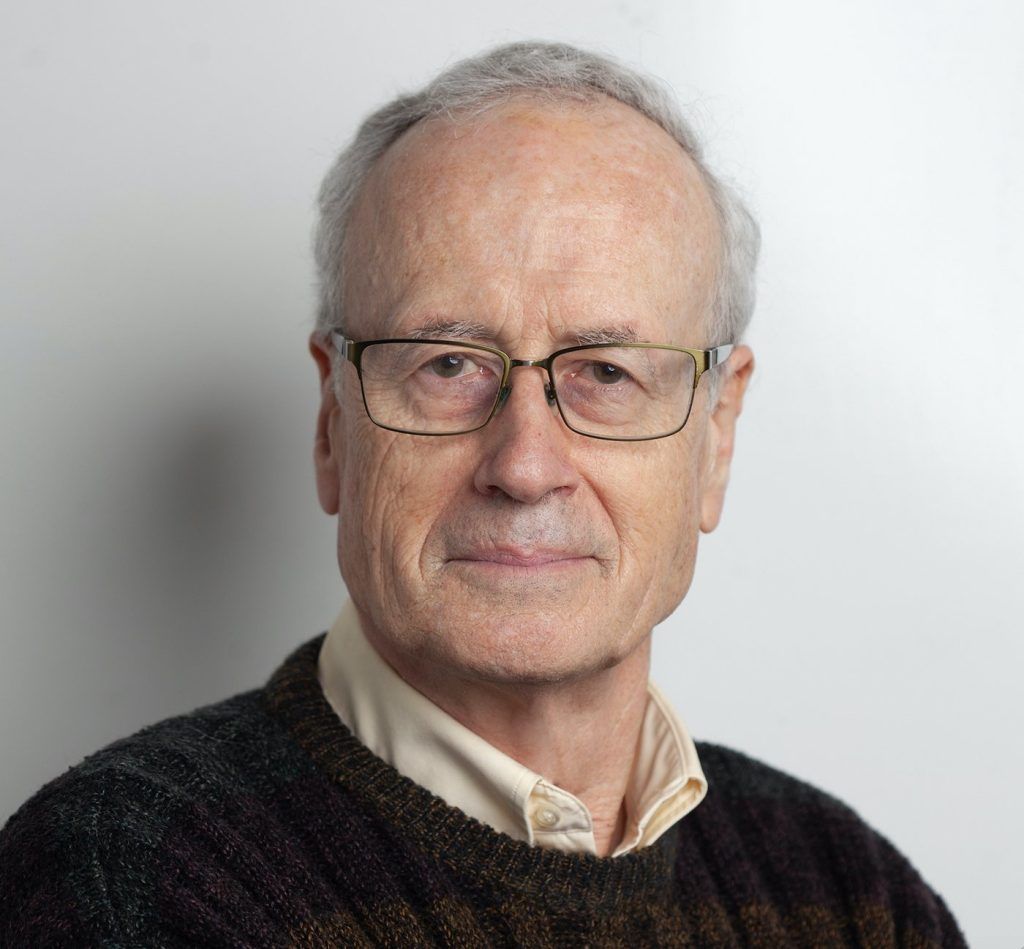
Dr. Murphy, professor emeritus of geography at the University of Oregon, author of Geography: Why It Matters and one of the architects of the AP Human Geography exam, received the American Geographical Society’s Cullum Geographical Medal this month at Geography 2050: Africa Shaping Tomorrow, the two-day symposium at the Schomburg Center.
The Harlem Times sent Dr. Murphy five questions. Our questions appear in bold. His answers, sent in writing, follow in his own words.
The Harlem Times: In Geography: Why It Matters, you invite readers to “think geographically.” What does that mean for an ordinary New Yorker?
Alexander Murphy: “To me, geographical thinking involves an awareness of, and curiosity about, three things: (1) the nature and significance of the spatial organization of people, places and things, (2) what the tangible world around us—the landscape—can tell us about why things are the way that they are, and (3) how where something happens affects what happens.
“For an ordinary New Yorker, at the scale of the city the first of these can shed light on why some places are more accessible than others, the second can pull people away from their devices and make walking around an enriching experience, and the third can help people understand why the same thing can happen in Harlem and Brooklyn Heights, but the results can be different. At larger scales, the first of these can offer insights into major developments shaping the planet (migration streams, access to water, geopolitical conflicts, etc.), the second can foster curiosity about other places, and the third can promote greater understanding of the particular issues and challenges faced by people living in different areas and regions.”
The Harlem Times: You helped create the AP Human Geography exam, now taken by millions of students. What should every student understand about the world?
Alexander Murphy: “Perhaps the greatest contribution a Human Geography course can make is to give students some understanding of how the world looks from other places. There are, of course, universal elements of being a human being, but any hope for greater understanding and peace on our planet requires an appreciation of the differences that exist from place to place and how those differences affect understandings, ideas, and possibilities.”
The Harlem Times: Why is it fitting that this year’s symposium centers on Africa shaping tomorrow?
Alexander Murphy: “At least in North America, Africa is the least well understood part of the world, yet it is a place of great richness, diversity, and importance. That is why I often opened the class I taught on political geography with a discussion of Africa, and it is why focusing more attention on the region in an AGS symposium makes sense. Devoting this year’s symposium to Africa also provided an opportunity to bring a greater range of voices into discussions of geographical change—voices that are too often not part of the mix, but that have much to offer.”
The Harlem Times: Why are the American Geographical Society and its work so important today?
Alexander Murphy: “For the most part, Americans have a woefully inadequate understanding of the nature and importance of geography. The AGS’s efforts to address that problem make its work of signal importance. Its efforts to promote everything from geography education to greater appreciation of the role of geographic technologies in addressing critical problems make it an organization that can help address critical challenges facing the planet in the twenty-first century.”
The Harlem Times: What sparked your love of geography, and what keeps it alive?
Alexander Murphy: “Early on I found myself drawn to maps (I loved looking through atlases as a child), and opportunities to travel and see what the world looked like from different places during my growing-up years spurred my love of geography. I was also lucky enough to have a father who was a geographer. He never pushed me to follow in his footsteps, but his evident love of the subject and his ability to convey that love to his children eventually led me to pursue a career as a geography professor.”
An old saying holds that a traveler sees what he knows. Dr. Murphy’s lesson runs the other way: learn to see, and you come to know. For New Yorkers and the Harlems of the world, that may start with nothing more than a walk around the block, eyes up.
Sources and attribution. Dr. Murphy’s answers were provided in writing to The Harlem Times (November 24, 2026); the words in quotation marks are his. His medal is as announced by the American Geographical Society. All other text is by The Harlem Times, prepared with help from THT Media Lab. Photo courtesy of Dr. Alexander Murphy.
Share this story and tag us: @HarlemTimesNews on X and @theharlemtimes on Instagram.