
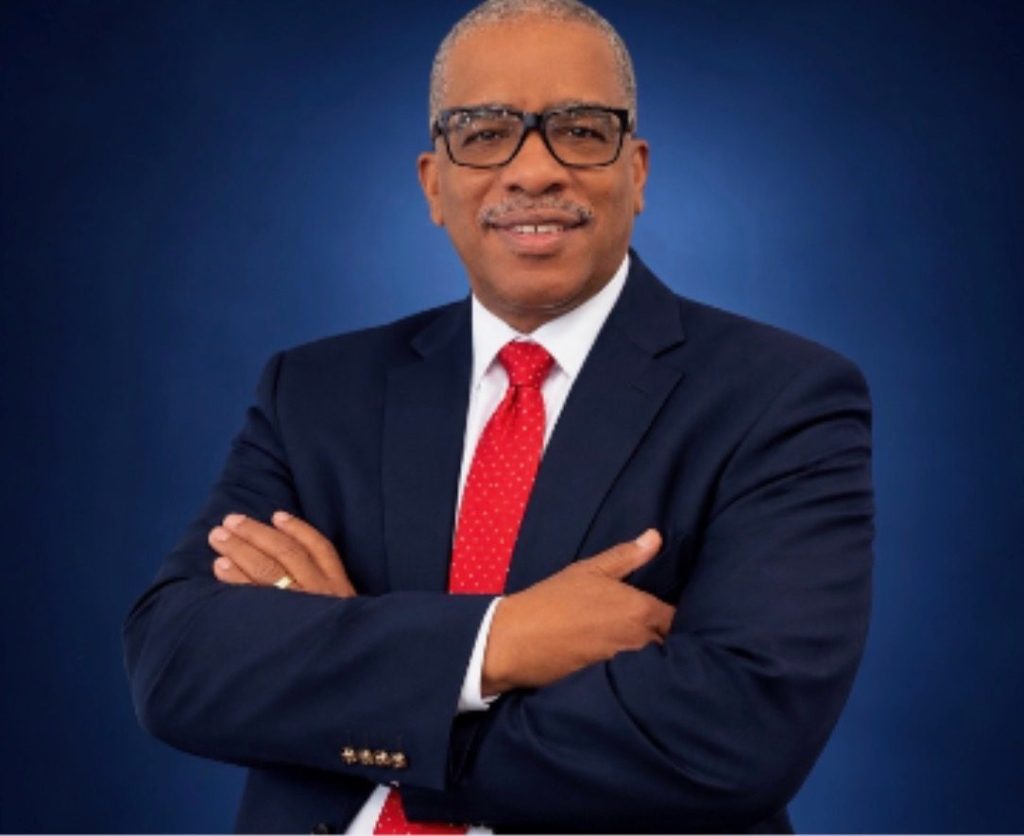
A Special Feature: Harlem’s Past, Present and Future. Harlem Through the Ages is a series of conversations with those who witnessed Harlem in the past, those who live with it in the present, and those with a vision of its future.
The Harlem Times: This week on Harlem Through the Ages, Mayor Wayne Smith.
This week, The Harlem Times sits down with one of the pioneers of Black, Caribbean and African success in one of the greatest communities in the world: Harlem, New York City.
Former Irvington, New Jersey, Mayor Wayne Smith was one of the early pioneers in life insurance for Harlemites. In the early 1980s, before his three terms in Irvington’s City Hall, he was an assistant director of marketing at United Mutual Life Insurance Company at 125th Street and Lenox Avenue. United Mutual was a Black-owned company, founded around 1930 by Black Americans and Caribbean and Virgin Islands immigrants at a time when segregation shut Black families out of the big insurers.
We talk about the days when some considered uptown a boomtown for the insurance, finance and banking game, what was lost, and what the next generation can build.
Questions are from The Harlem Times. Every answer is Mayor Smith’s own words from our May 19, 2026 conversation, lightly trimmed for length and clarity.
The Road to 125th Street
The Harlem Times: Let’s start with you. Tell our readers about yourself.
Mayor Smith: It’s my pleasure to work with you, Paul. I served as mayor of Irvington from 2002 to 2014. I did three terms. I was the first mayor in Irvington’s history to do three terms. Before that, I served as a councilman at large and also the council president. And before that, I was the confidential assistant to the first Black mayor of Irvington.
The Harlem Times: Long before City Hall, you were selling insurance. How did a young broker from Newark end up at 125th and Lenox?
Mayor Smith: You, as a journalist and publisher, will appreciate this. I was reading the Amsterdam News one day, and they had an ad in the paper saying, “We offer an insurance policy for seniors.” Right now, if you turn on your TV, you’ll see many commercials targeted to older people. Back in the late ’70s and the ’80s, that wasn’t the case. This Black-owned life insurance company was doing that then. I said, “Oh, they got a policy that’d be good for some of the seniors who can’t get insurance.”
I was an independent insurance broker, so I called the company up and said, “I’d like to get a contract with you to sell what you’re offering.” We put some numbers on the books, and Michael Sanders, who was there as director of marketing, said, “I got to see who’s selling these policies.” He came to my office in Newark. He was a young man like I was. We were in our early 20s.
He said, “It may be difficult for you to be the CEO of Prudential, but here at United Mutual, you can end up being CEO.” I could make more money as a top salesperson on commission. But I liked the idea of working for a Black-owned company where you could kind of determine your destiny and you could reach the top pinnacles without any hindrance. So I bit the apple, and I became an assistant director of marketing.
The Harlem Times: Where did that work take you?
Mayor Smith: We were licensed in New York, New Jersey, the District of Columbia and the Virgin Islands. I had a little bit of New York, I had all of New Jersey, since I was from New Jersey, and I had the District of Columbia. Of course, my boss took the Virgin Islands. I liked Washington, D.C., because I got a chance to recruit students at Howard University. It was a very interesting time, and I saw the interwovenness of the potential of Black economic power.
The Boomtown Years
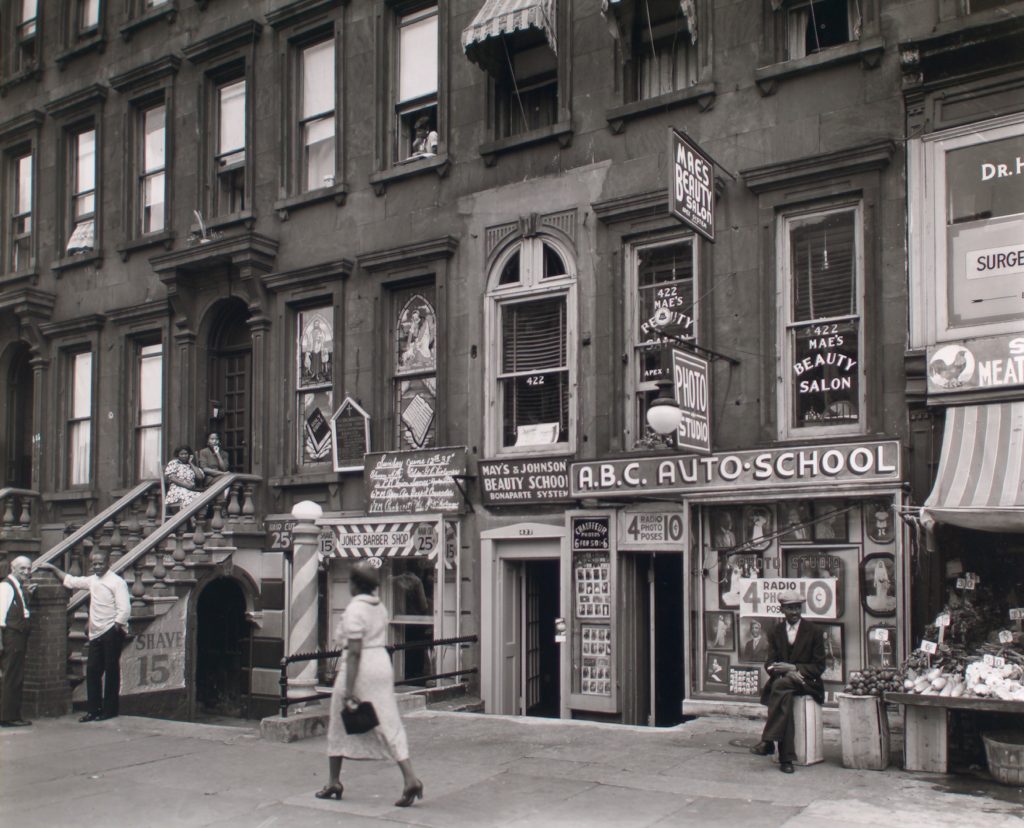
The Harlem Times: For young readers who never knew it, why did a Black-owned life insurance company matter so much?
Mayor Smith: It’s very difficult for young people to understand a world that we were locked out of. The freedoms that we earned, which many people feel are under attack today, are not to be taken for granted. During segregation, we could not buy life insurance from Prudential, MONY, and New York Life. Today we take that for granted. People don’t remember we had burial societies. Many times our churches and our houses of worship buried us, or money was raised to do it, because we couldn’t procure insurance.
So around 1929, 1930, during the Depression, a group of Blacks, some from America, and I believe some from the Caribbean and some from the Virgin Islands in particular, decided they were going to create a burial society that ultimately became a life insurance company, mutually owned. A mutually owned life insurance company means the policyholders are the owners of the company. And because they couldn’t buy insurance anywhere else, the policy owners were all Black folks.
Insurance companies are really one of the bellwether industries of American society. If you look at who finances major developments, who manages pension funds, who invests in major real estate projects, it’s insurance companies. So having an insurance company that the policy owners owned is a huge deal.
The Harlem Times: Paint us a picture of 125th Street in those days.
Mayor Smith: United Mutual Life was on the corner of 125th and Lenox Avenue. We owned that whole block between 125th and 126th on Lenox. Freedom National Bank, founded by Jackie Robinson, was open. Freedom was very significant because they were able to provide mortgages and business loans and loans to churches that were kind of locked out of the market. They were on 125th, not too far from the Harlem State Office Building. And in the other direction, right around the corner from us, was Carver Federal Savings Bank. Carver is still open.
So right within probably a three-block radius were three powerful Black financial institutions that served as a beacon example of what the Black community could do once we put our resources together. Carver, Freedom National, United Mutual Life Insurance Company: hallmarks of the Harlem community.

The Harlem Times: And the people? You were in the room with some legends.
Mayor Smith: Eugene Webb is a real estate legend in New York with the great firm of Webb & Brooker. He was one of the African Americans in Harlem who early on made investments in making sure there was Black home ownership and development going on in the Harlem community, and he became the chairman of the board of United Mutual. One of the board members ended up being the mayor of the city of New York, the Honorable David Norman Dinkins. He was the city clerk of New York when I worked there.
Who was Eugene Webb? Eugene H. Webb (1918–2021) co-founded Webb & Brooker with George M. Brooker in 1968, during the civil rights movement, and built it into one of Harlem’s most successful real estate firms. He was part of the groups that founded Carver Federal Savings Bank and Freedom National Bank, and he chaired Freedom National’s board. He co-founded the Harlem Real Estate Board and was a governor emeritus of the Real Estate Board of New York. He died in April 2021 at 102. Source: The Real Deal.
In our building we had what was then called the Uptown Chamber of Commerce, with the late Lloyd Williams. If I can remember correctly, I don’t think we charged them any rent. It was to help them get their organization running. I think we were sponsors of one of the first events. It was then called Harlem Day, then it morphed into a week, and now I think it’s really a month.
You had Percy Sutton, who ultimately became the Manhattan Borough President. Percy Sutton was Malcolm’s lawyer, and he was one of the persons I admired most, with his ability to not only be involved in politics but be a major entrepreneur. WLIB was one of the first Black-owned stations that did primarily talk radio, and they used that as an education and political platform to educate our community about the issues of the day and help candidates get elected.
Harlem was a different place in the ’80s than it is today. The major retailers like Whole Foods were nowhere to be found. Sylvia’s was the premier restaurant, becoming a tourist attraction, attracting people from around the world. One of the anchor institutions then was the 125th Street Mart, which allowed a number of small Black vendors to put their businesses inside.
Faith and Finance
The Harlem Times: You found a way to bring the Black church into the insurance business. Where did that idea come from?
Mayor Smith: Black Enterprise magazine did a story once on how much money left the Harlems of the world and went downtown. How much money was collected on Sunday and ended up in downtown banks on Monday? And then when churches needed to borrow money for expansion, to build a new church, to support a program, or to build senior housing, they couldn’t get it.
We took that story as an insurance company, and our marketing team said, “How does this relate to the insurance industry in the Black community?” Insurance companies collect our premium dollars. What do they invest their money in? Treasury bonds and notes, stock, major real estate deals. But are any of these deals in our neighborhoods? Are they investing in the apartment buildings that we live in? The answer was a resounding no, for the percentage of money that we were paying as a community. So we asked, what is the most organized entity that African Americans were going to on a regular basis and had faith in? And that was the Black church.
The Harlem Times: How did the program work?
Mayor Smith: Many colleges and universities get legacy giving. People leave that in their wills. But we didn’t see a lot of that going to the Black church. So we said we ought to make an easy way for anybody, whether they’re rich or working class, to do something for their house of worship when they’re not here. People forget that every house of worship has a business side. The lights got to be on, or you can’t come there to worship.
A person could leave a small $5,000 policy or $10,000 policy to their church, and if they made the church the owner of the policy, then that becomes tax deductible. A lot of churches at that time had envelopes. You paid your tithes, missionary work, pastors’ aides. We added your insurance premium to the list, and we said, “Instead of you bearing the expense of those envelopes, let us print them for you.” We gave the church clerk a computer printout of everybody who signed up, and they would send us the money every month.
We did that throughout the Harlem community and other places in our licensed jurisdiction, and it was very successful. We put so much new business on the books through that church marketing program that we broke a couple of computer systems.
The Harlem Times: And the churches came to you for more than insurance.
Mayor Smith: We got involved with the African Methodist Episcopal Church, and I met Floyd Flake. He was a young man during that time. I heard him speak and said, “Who’s this young guy? He’s going to be somebody.” And he sure ended up in Congress and building a financial empire in Queens. During that time, the AME Church was building a mini convention center in Rochester, New York. They said, “We need a little money for this convention center,” so we financed it. It showed the example of what we can do as a collective when we put our resources together.
Not Aid, but Trade
The Harlem Times: You also worked alongside the Reverend Jesse Jackson. Tell us that story.
Mayor Smith: Reverend Jackson used to run programs where he challenged corporations to do business with Blacks. The theme was not aid but trade, not social generosity but economic reciprocity, not welfare but our share. He had this thing called the PUSH International Trade Bureau, and I convinced the company that we should be a part of that. His goal was to confront major corporations: Do you use Black media? Do you buy from Black insurance companies? Do you put deposits in Black banks? I remember he took on Budweiser. Bud is a dud.
We went to one of the conventions in Chicago, and one of the deals Jesse got involved with was the Heublein Corporation. Heublein was a huge conglomerate. They owned Smirnoff vodka and KFC, Kentucky Fried Chicken. Jesse was able to negotiate a deal, and one of the things they said they wanted to do was buy from Black insurance companies. So I worked with Jesse’s staff, and they picked us. I think we competed with another Black-owned company out of California, but we ended up with the contract.
The Harlem Times: That must have been quite a day.
Mayor Smith: We had a major announcement at the Harlem State Office Building. Mr. Webb was so excited. Jesse was coming to New York to sign this deal with Heublein. I think the CEO or the chairman of the board of Heublein came. It was a big, big, big deal. So of course, the president, the CEO, the chairman of the board were up front. After I did all this work, I didn’t get no spotlight on that! But we ended up getting the deal, and I was so proud of that accomplishment.
At the passing of Reverend Jackson, one of the things I could always say is I was always a great admirer and follower of the work that he did around bringing corporate America and Black companies together to do business.
What Was Lost
The Harlem Times: United Mutual no longer exists, and Freedom National is gone too. What happened?
Mayor Smith: I left in late ’83 or early ’84, and after that I think they saw a revenue dip. The state of New York made sure that people who had policies and claims were paid. MONY, Mutual of New York, took over all the policyholders for United Mutual.
Here’s what happened to us, and this happens to a lot of our institutions. As our people became more middle class, they stopped using our institutions. Remember, the company started in 1930. In the 1940s, 1950s, 1960s, we had a lot of the Black market in places like Harlem and D.C. But when you get to 1970, more people were becoming working class and middle class, and they had insurance on the job. Then the bigger companies recognized that as a more viable market.
It’s a two-sided story. Some of it is the Black institutions didn’t catch up with some of the products that people needed as they became more middle class. And some of it is us not even staying with our company to make sure they’re viable and forcing that market change. Some of the companies that did change and grow with the market survived. North Carolina Mutual lasted a longer period of time, and a few of the Black life insurance companies still exist. But many went the way of many of our Black banks.
The Harlem Times: And when those institutions fall, the money that builds our churches and buildings leaves the community.
Mayor Smith: Now here’s the challenge. I challenge our community today. With all the MBAs, with all the technological geniuses we have in the Black community, with all the experience and exposures we have with the Fortune 500 companies, we now have the capability, the experience, the personnel to do anything anybody else does. Why don’t we do it for our own institutions?
Today and Tomorrow
The Harlem Times: Today DEI is treated like a dirty word, the Voting Rights Act is being chipped away, and AI is changing the nature of work. How do we not only survive, but thrive in the 21st century?
Mayor Smith: We’ve faced these challenges before. The degree is different and the style is different, but I think it calls for the same kind of vigilance. I say this today: we are better equipped through education, through training, through exposure than we, as a people, have ever been. And so we have to figure out how we’re going to scale ourselves to protect the gains and then expand on them.
Part of it, I think, is a hybrid model: the best of the Black empowerment movement, the best tactics of the civil rights era, with a whole dose of self-building of institutions. One of the training grounds is our historically Black colleges and universities, with a focus on how we take businesses to scale. Everybody says support Black businesses, and I support that as a Black businessperson myself. But we have to scale some companies. It could be our own credit unions, our own banks, our own insurance. We’ve got to be more focused than ever before.
The Harlem Times: You quoted Jesse Jackson’s call for economic reciprocity. What does that look like now?
Mayor Smith: If my community buys your product, then to me, you should be investing in Black media that I read. You should be investing in Black communities which I frequent, because we provide the economic base for your company to survive. That, to me, is fundamental fairness and good business. We have to look at our consumer spending not just as spending, but as an investment in the growth of that company.
People often think of the civil rights movement and think about the South. But Harlem played a major role in helping us develop economic strategies. Abyssinian Baptist Church and the great Adam Clayton Powell ran “Don’t buy where you can’t work” campaigns when many of the retailers in Harlem wouldn’t hire Black workers. If you have a business in my community, but you don’t hire and you don’t do business with the community, why should I do business with you?
The Harlem Times: What else stands in the way?
Mayor Smith: The class divide. When I grew up, my teacher might have lived around the corner. She might have been more educated than my parents, but she wasn’t that far from me. Today, the Black middle class and the Black poor are divided. One of the few places that still exists like that is the barbershop. That’s where our commonality is, across educational lines, across cultural lines: all of us meet in the barbershop. So we’ve got to figure out more spaces like that, so that we can help the least of these.
The Harlem Times: Can technology like AI help rebuild the institutions you described, and loop that money back into the community?
Mayor Smith: Absolutely. How do we use AI to enhance the things that we already have? With AI, they thought they would lessen employment in radiology. They had to hire more people. But you’ve got to have a human being there as a check on what you’re getting out. Garbage in, garbage out. I think the human touch, the feelings that human beings have, can’t be replaced.
One of the challenges I see for us as a community: our older institutions sometimes don’t want to let the younger people step up and take charge, who have the skills and want to try the innovation. Sometimes the cure can kill the patient. We don’t want to kill the patient, but we have to make sure that we blend it in, so that the old that helped build it can also survive while this new wave of innovation takes us to the next level. It’s a delicate balance, but I think we can do it.
It’s a lot of work to do, but there are no easy answers. But there are answers.
An African proverb warns that a river that forgets its source will soon dry up. Mayor Smith’s story is a reminder of what happens when a community forgets the institutions it built, and of what it can build again when it remembers. The Harlem Times thanks Mayor Wayne Smith for walking us back through those years, and forward into the ones ahead.
Share your Harlem. If you have stories of Harlem’s past, or know of someone who is doing great work today or has an exciting vision for Harlem’s future, please send this information to pjackson@theharlemtimes.com and harlemtimes@gmail.com. Meanwhile, enjoy our global news and try your hand at The Harlem Times Crossword.
Share this conversation and tag @HarlemTimesNews on X and @theharlemtimes on Instagram.
Success Is Our Birthright