
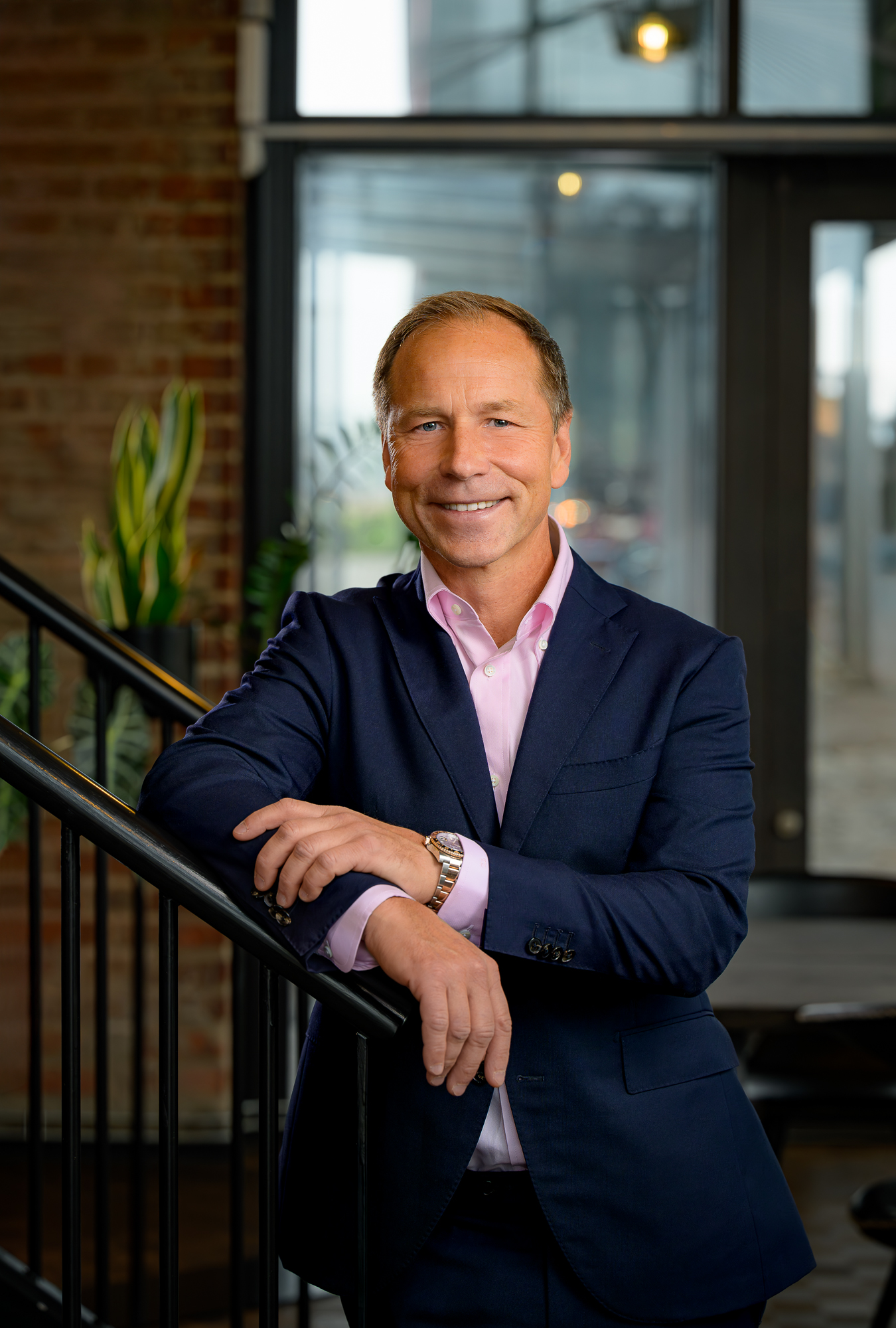
Story by THT STAFF, Photo: Tord Labuda, CEO of Alzinova
Alzinova is testing an experimental treatment intended to help the body fight harmful protein clumps in the brain. Early data is promising, and the next round of research will help show whether that promise holds.
“When an elder dies, a library burns to the ground.”
— West African saying, popularized by Malian writer Amadou Hampâté Bâ
In many African and African American families, our elders are our libraries. They hold the recipes that were never written down, the names of relatives three generations back, the stories of how the family made it North, and the lessons we only understood years later. Alzheimer’s disease threatens to burn those libraries slowly, one shelf at a time, often while the person is still sitting at the dinner table with us.
The disease touches every corner of society. When former President Ronald Reagan told the nation in a handwritten letter in 1994 that he had Alzheimer’s, he opened a door that many families had kept shut out of shame or fear. Suddenly, people were willing to say the word out loud.
It has touched Harlem, too. Sugar Ray Robinson, the boxer many still call the greatest pound-for-pound fighter who ever lived, once owned a café and businesses on Seventh Avenue and was a fixture of Harlem life. In his final years, he lived with Alzheimer’s. The man who had been so quick in the ring gradually lost the memories of the life he had built.
And for every famous name, there are thousands of stories like this one. (The following is a composite, drawn from experiences common to many families.) Miss Bernice raised four children and half the block on 138th Street. She never missed a Sunday service and could tell you the birthday of every grandchild. Then she started leaving the stove on. She called her daughter by her sister’s name. One afternoon, she got off the bus two stops early and couldn’t find her way home to a building she’d lived in for forty years. Her family kept telling themselves it was “just old age,” until a neighbor found her confused and frightened on the corner.
That delay is common in our community, and it is costly. According to the Alzheimer’s Association, older Black Americans are about twice as likely as older white Americans to have Alzheimer’s or another dementia, yet they are more likely to be diagnosed late, or not at all. They have also been underrepresented in the clinical trials that decide which treatments reach the market.
That is why The Harlem Times is paying attention to the science. We sat down with Tord Labuda, CEO of Alzinova, a small Swedish company working on a new approach to the disease.
The Harlem Times: What is Alzinova working on?
Tord Labuda, CEO of Alzinova: We are developing an experimental treatment called ALZ-101. It is designed to stimulate the body’s immune system to recognize and fight small clumps of a protein associated with Alzheimer’s disease.
The Harlem Times: Can you explain that in simpler terms?
Tord Labuda: A protein called amyloid beta is found in the brain. In people with Alzheimer’s, pieces of it can gather into clumps. Scientists have studied larger deposits, called plaques, for many years. We are focusing on smaller clumps that may also harm brain cells. Our approach is intended to help the body produce its own antibodies—proteins that can recognize and attach to a target.
Think of it this way: rather than bringing in outside help to clean up the damage, the idea is to teach the body’s own defenses to recognize the troublemakers early, before they do more harm.
The Harlem Times: How is ALZ-101 different from treatments already available?
Tord Labuda: Some existing treatments target the larger plaques. ALZ-101 is designed to target the smaller clumps instead. We hope that approach may eventually be more effective and have fewer side effects. But ALZ-101 is still experimental. It has not been proven to work better or be safer than available treatments.
The Harlem Times: How far along is the research?
Tord Labuda: We have completed an early study, called a Phase 1b trial, and have seen promising data. At the time of this interview, we were preparing a Phase 2 study in the United States and Europe. We expected it to include about 120 patients, with the first participant joining around year-end or early the following year. We expect the study to last about three years.
The Harlem Times: What would happen after Phase 2?
Tord Labuda: If development continues, the next step would be a larger Phase 3 trial. That study could include up to 1,500 patients. Larger trials help researchers learn more about whether a treatment works and what risks it may have.
For families living with Alzheimer’s today, these timelines can feel painfully long. But this careful, step-by-step process is what protects patients. Every phase is a chance to find out whether a treatment truly helps, and whether it is safe, before it reaches our mothers, fathers and grandparents.
The Harlem Times: What do you know about safety and how often the treatment might be given?
Tord Labuda: In our early studies, we have not seen major safety concerns. We have seen some redness around the injection site. The treatment might eventually require three injections a year, but that is not an established treatment schedule. More research is needed.
The Harlem Times: Could your research also lead to an earlier way to detect Alzheimer’s?
Tord Labuda: We observed that some older people without Alzheimer’s appeared to have antibodies to these protein clumps, while the patients in our study did not. We have a letter of intent with Fujirebio to explore whether this could help identify people at risk earlier. A blood test is an idea we are investigating, not a test that is ready for use. If development goes well, it could potentially reach the market in about three years.
Think back to Miss Bernice. A simple blood test, if one is ever proven to work, could mean a family gets answers years sooner, while there is still time to plan, to talk, and to record the stories before they fade.
The Harlem Times: How will Alzinova make sure Black Americans are represented in its trials?
Tord Labuda: It can be difficult to include a wide range of participants in a Phase 2 study of 120 people. We expect diversity to be an important consideration in Phase 3, which could be much larger. At the time of this interview, we had not set specific enrollment targets or named trial locations. Our research partner was still evaluating possible U.S. sites.
This is the question our community must keep asking. A treatment tested mostly on one group of people may not tell us enough about how it works for everyone else. If Black Americans carry a heavier share of this disease, we deserve a fair seat at the table where the answers are being found. The Harlem Times will continue to follow up on where these trials take place and who is invited to join them.
The Harlem Times: What should readers keep in mind about ALZ-101?
Tord Labuda: It is an experimental treatment, and further studies are needed to determine whether it is safe and effective.
Keeping the Library Open
Hope is not the same as a cure, and ALZ-101 is still a long way from any pharmacy shelf. But hope matters. It keeps researchers working, keeps families asking questions, and keeps our community from suffering in silence.
If someone you love is forgetting more than usual, getting lost in familiar places, or struggling with everyday tasks, don’t wait and don’t write it off as “just getting older.” Talk to a doctor. Ask questions. And while there is still time, sit with your elders and listen. Record their voices. Write down their stories. Protect the library.The Harlem Times will be interviewing a series of executives about Alzheimer’s disease to bring greater awareness to the illness and the work being done to fight it, with the hope that one day we can be free of it.