
By The Harlem Times Staff
UPDATE: The 7th Annual Triumph of the Human Spirit Day took place on Thursday, October 8, 2026, with a drum procession from the African Burial Ground National Monument to Dr. Lorenzo Pace’s Triumph of the Human Spirit monument in Foley Square. Our preview of the day and our conversation with Dr. Pace follow below.
Se wo were fi na wosankofa a yenkyi. It is not taboo to go back for what you forgot.
Akan proverb, Ghana
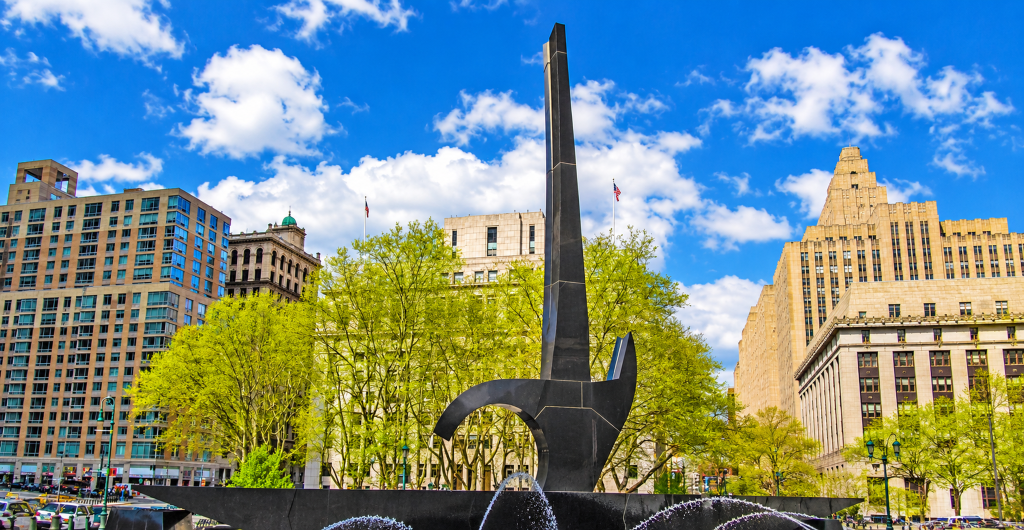
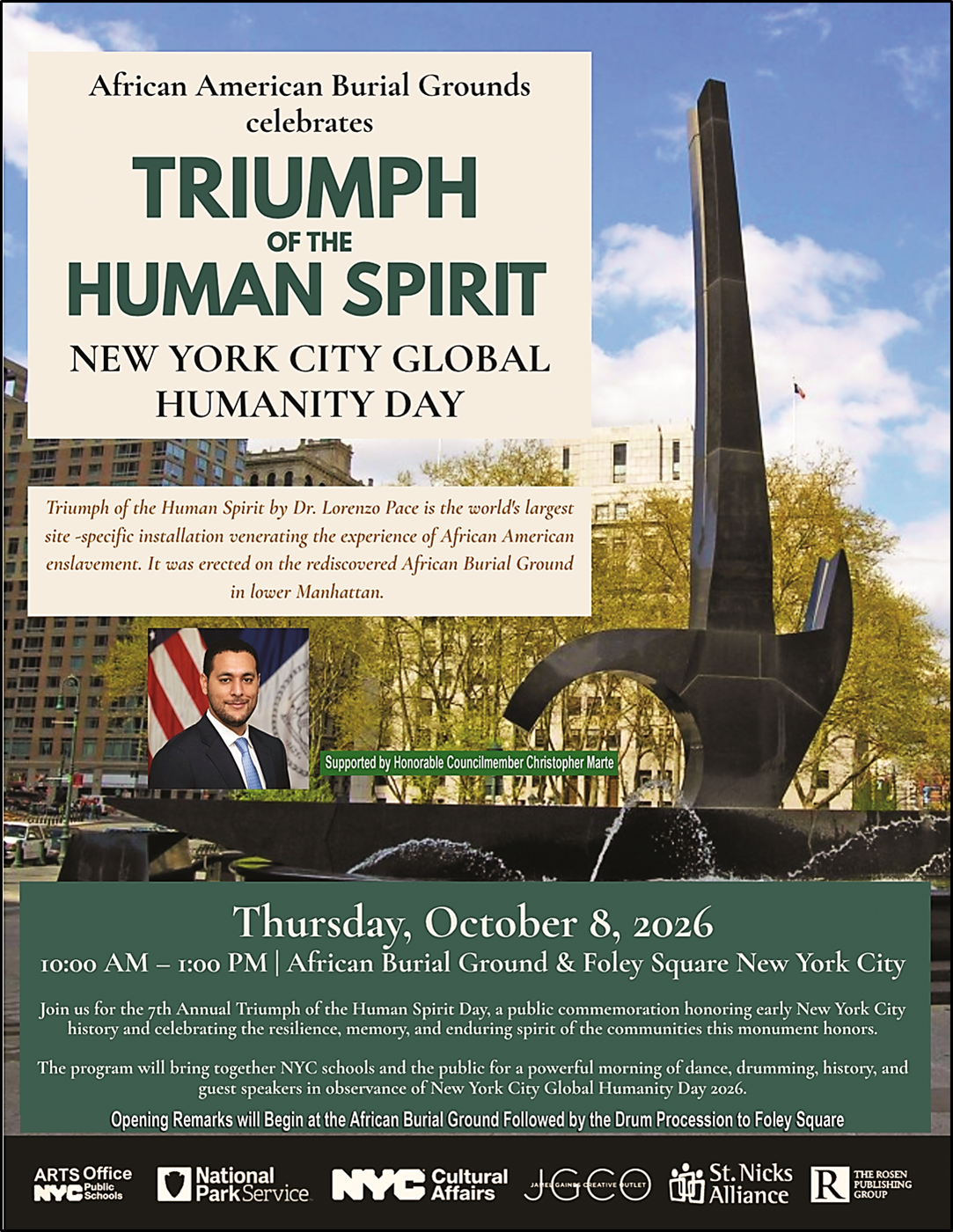
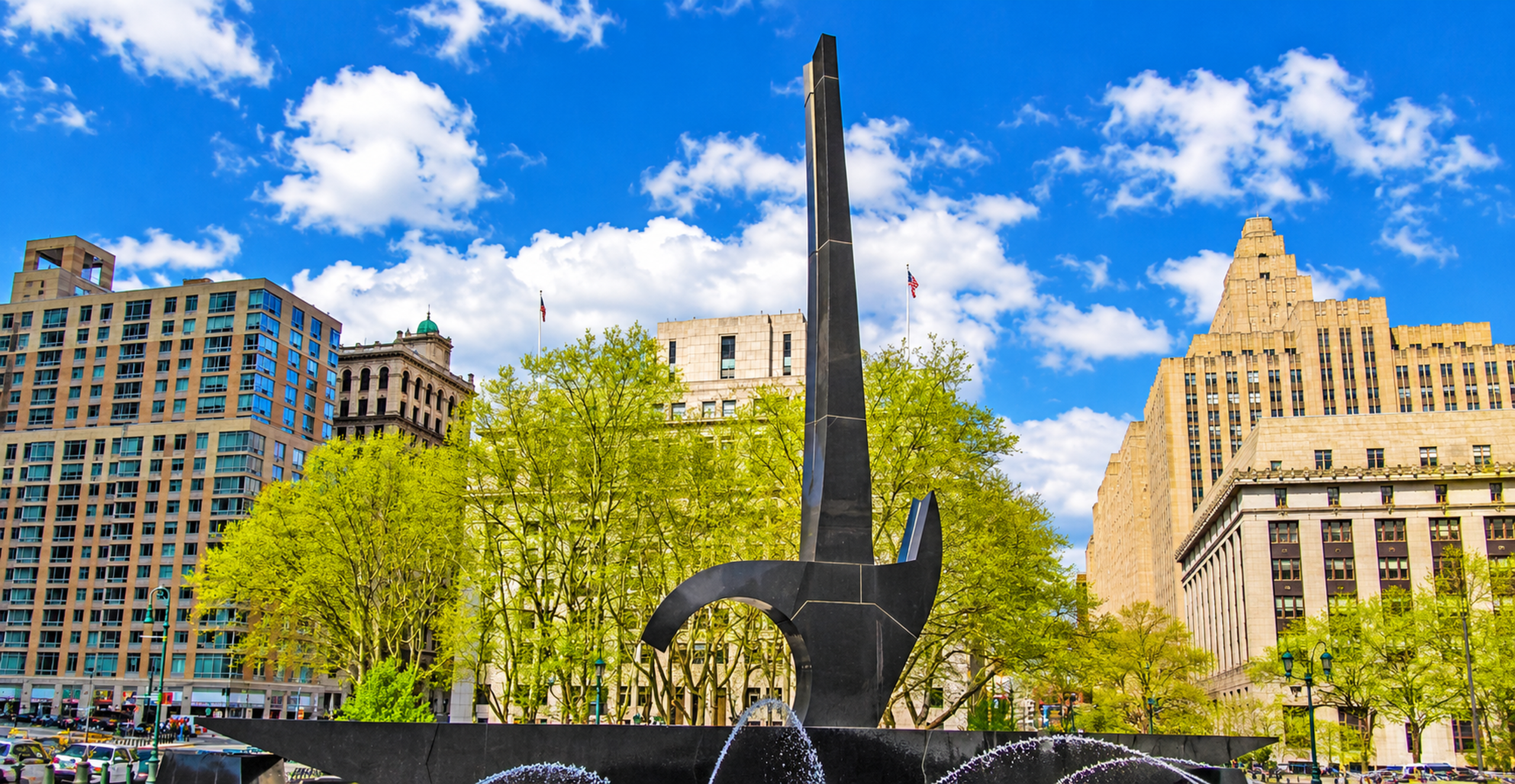
In Foley Square, fifty feet of black granite rise from a fountain among the courthouses of Lower Manhattan. Dr. Lorenzo Pace’s Triumph of the Human Spirit stands beside the African Burial Ground, where an estimated 15,000 free and enslaved Africans were laid to rest in colonial New York.
On Thursday, October 8, drums will lead a procession from those graves to that monument. To understand why the walk matters, listen to four voices. They are imagined. The history beneath them is not.
The Past: Buried Outside the Wall
I cleared your Broadway and raised the wall your Wall Street is named for. When I died, the law kept me out of the churchyard. My people carried me past the edge of the city, twelve mourners and no more, never after dark. They laid me facing east, toward home.
This could be any of the thousands under Lower Manhattan, or a voice from far beyond it. Most of the 12.5 million Africans forced onto slave ships were bound for the Caribbean and South America, not North America.
My sister was sold to the cane in Barbados, which used people up in a few seasons. My brother went down into the gold mines of Brazil and did not come up. One ocean. One wound.
Our lineage did not begin in those ships. It was interrupted there. That is why what came before the ships matters now: a people who know where they started cannot be told they came from nothing.
The Recent Past: Free on Paper
They called me free. In Alabama, free meant the back door, the poll tax and the rope. My cousins in Kingston and Accra were told they were subjects of a crown they never chose. Jim Crow and the colonial governor were the same man in different hats.
Dr. Pace knows this voice. He was born in Birmingham, Alabama, in 1943. New York, meanwhile, built over its African dead and forgot them, until construction crews struck the graves in 1991. The city commissioned his monument in answer.
The Present: Still Counting
I have a vote and a voice, and still I am counting. The cells. The redlined blocks. The names we chant in the street. They freed my body and went to work on my mind.
And bondage itself never ended. It changed its address. The International Labour Organization estimated in 2021 that some 50 million people were living in modern slavery, many of them trafficked. The descendant of the auction block and the child sold across a border this morning belong to one struggle. Liberation that stops at our own door is unfinished.
The Future: Look Up and Live
In the wilderness, when serpents struck the children of Israel, God told Moses to lift a serpent of bronze on a pole. Those who looked up lived.
Pace’s monument asks the same of us. Its base is shaped like a boat, recalling the Middle Passage. Above it rises a form drawn from the Chi Wara, the antelope of the Bambara people of Mali. The ship stays at the bottom. The eye travels up. The monument does not ask us to forget the bite. It asks us to remember the past, honor the present struggle, and look toward what is coming.
I am the child at the front of the march. Harlem walks beside Havana, Salvador beside Soweto. All God’s children, body, mind and soul unbound. No one behind us in chains.
In His Own Words: Dr. Lorenzo Pace
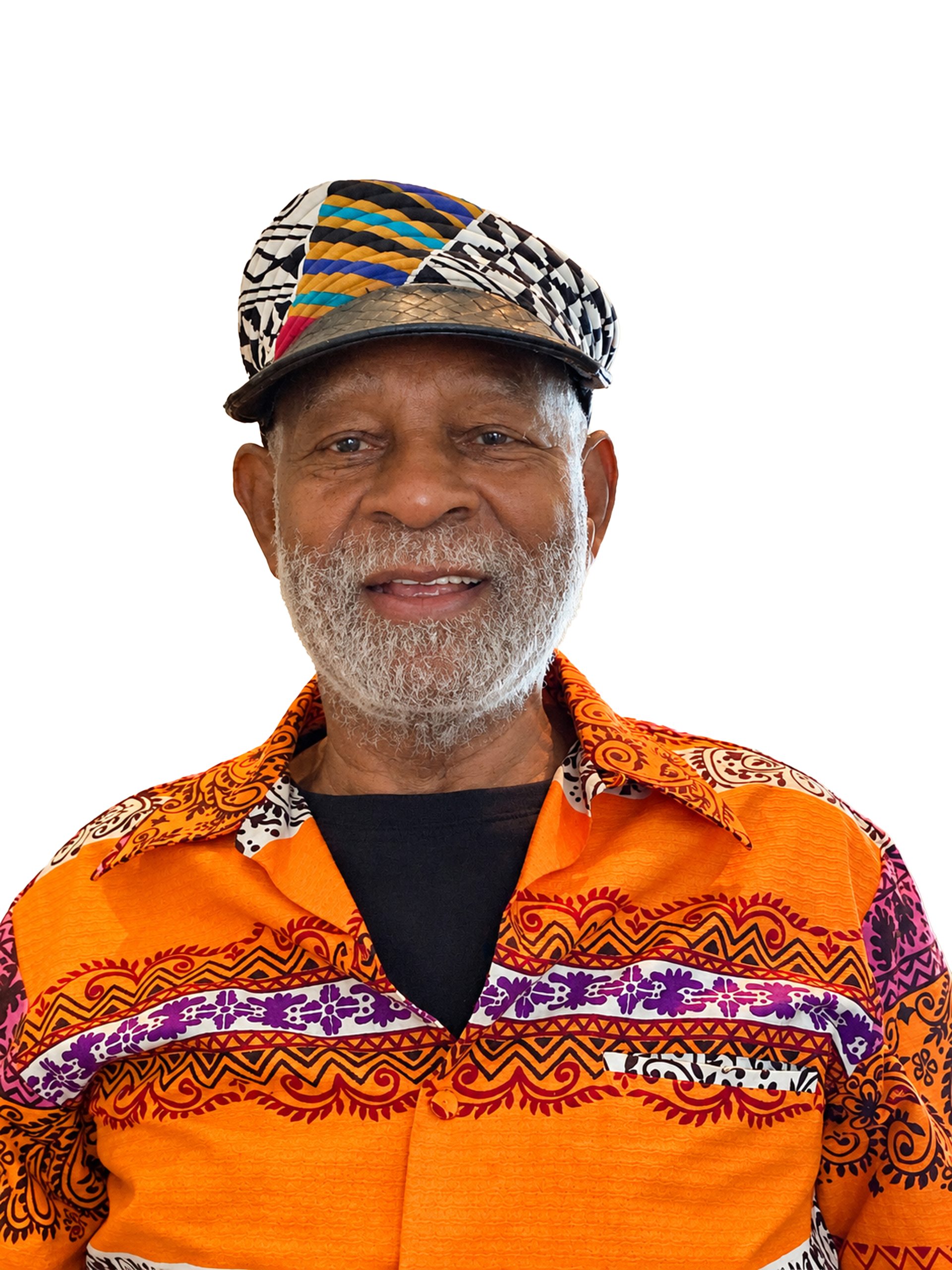
Dr. Pace spoke with The Harlem Times. The conversation has been edited for length and clarity.
The Harlem Times: Can you talk about the 1991 excavation and the reinterment?
Dr. Lorenzo Pace: When they discovered the remains they stopped the project, removed the bones, and took them to Howard University for analysis. Later they reinterred them at the site. I insisted the community decide when the monument should be unveiled. When Mayor Giuliani scheduled the unveiling on Columbus Day, I rewrapped the monument and the community held its own celebration the following week.
The Harlem Times: What does the walk from the burial ground to your sculpture signify?
Dr. Lorenzo Pace: The procession is like the processions we have in Africa. Walking from the grounds to the monument is one continuous act of remembrance and celebration. I based the piece on the female Chi Wara because she carries the baby on her back, representing the next generation.
The Harlem Times: How did losing family members in 1991 affect the piece?
Dr. Lorenzo Pace: I placed an iron lock and bronze elements at the gate to connect my family history in Birmingham, Alabama, to the enslaved population here. The lock links our family to the community buried at the site. It expresses that we all come from the motherland and are connected.
The Harlem Times: The base reads as canoe, slave ship and immigrant vessel. Why bring those histories together?
Dr. Lorenzo Pace: The site was originally Collect Pond, where Native Americans fished and hunted. The area later received immigrants by boat and, of course, enslaved Africans by ship. That convergence is the triumph of the human spirit.
Who Will Stand There
The names on this year’s program make an argument of their own. Architect Rodney Leon designed the memorial at the African Burial Ground and, later, the slavery memorial at the United Nations. With Pace beside him, the creators of the burial ground memorial and the Foley Square monument will share ground. Christopher Marte represents Lower Manhattan on the City Council. Civil rights attorney Norman Siegel stands for justice in a square ringed by courthouses. The Harlem School of the Arts stands in for the children who will inherit this history.
Curtis Archer will emcee. Jamel Gaines and his dancers will perform, joined by drummers, poets, Larry Campbell and Eric Tait. When artists, elders, lawmakers and students stand together, remembrance becomes public record.
African Square: A Call to the Diaspora
Dr. Pace has proposed renaming Foley Square. “Names matter,” he said. “Renaming it African Square would center that history publicly. It would reflect the truth of the place and help direct attention toward education, commemoration, and policy.”
Queen Mother Dòwòti Desir, who was a special consultant to the General Services Administration, and community historian Madeleine Jackson have given the renaming their blessing.
The Harlem Times adds its voice to theirs. Let this granite be a Mecca, a place of pilgrimage for descendants of the enslaved across the African diaspora, one the scattered children of Africa turn toward and travel to at least once. Let them come from Bahia and Port-au-Prince, Kingston, Accra and London, to stand where the ancestors lie, say what was done, and look up.
Freedom begins with acknowledgment. What the whole world agrees to remember can no longer be denied, and what cannot be denied loses its power to bind. That is how a stone can free the spirit and point us toward the glorious freedom ahead.
So here is the call, to heads of state, to houses of worship, to schools, and to every family that carries this history: join the call for African Square. Send your delegations and your children. Begin on October 8.
“It’s a family matter,” Pace said. “We should celebrate and organize as one.”
If You Go
What: 7th Annual Triumph of the Human Spirit Day
When: Thursday, October 8, 10 a.m. to 1 p.m.
Where: Gather at the African Burial Ground National Monument, 290 Broadway, Lower Manhattan. A drum procession continues to the monument in Foley Square, at Lafayette, Worth and Centre Streets.
Website: TBD