Long before the word "excellence" existed, the people of the Nile Valley had a word for the standard every life should be measured against: Maat. It meant truth, balance, order, harmony and justice, all at once. It was not a finish line. It was a direction, a way of moving every day toward perfection.
Ancient Egyptians pictured Maat as a woman wearing a single ostrich feather. In the judgment of the dead, a person's heart was weighed on a scale against that feather. A heart made light by a life of truth and fairness passed into paradise. The idea is ancient: Maat appears as the norm for nature and society in the Pyramid Texts of King Unas, carved around 2375 to 2345 BCE.
Maat asked something of everyone, not only of kings and priests. The farmer, the scribe, the soldier and the ruler each had a part to play in keeping the world in balance. That is the idea at the heart of a new educational series from THT Media Lab.
Many paths, one standard
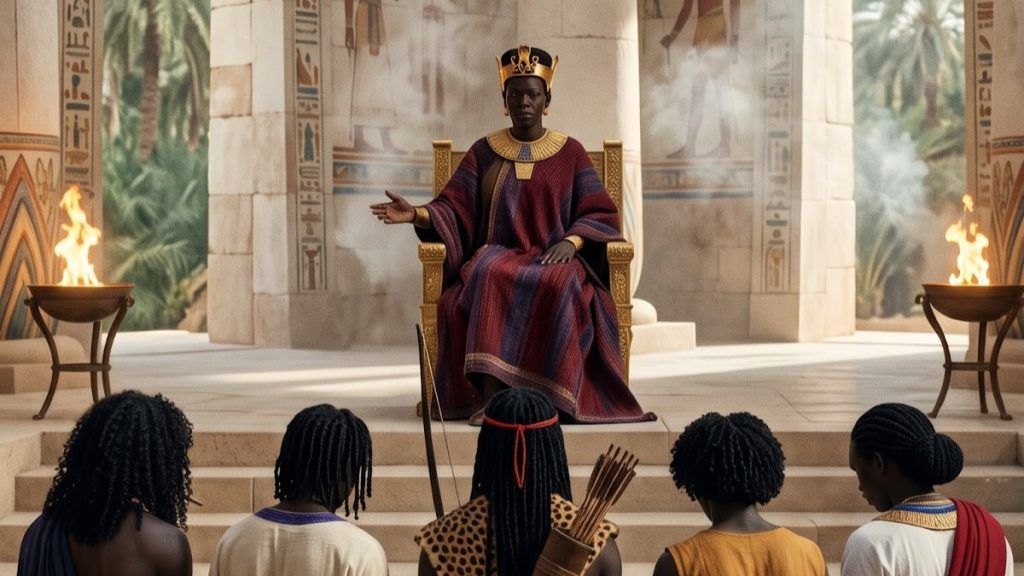
The navigator, the linguist, the builder, the warrior, the politician and the queen
The images below come from The Five Sons of Alkebulan, an original historical adventure created by Harlem Times publisher Paul Jackson. Each figure follows a different calling. Each, in his or her own way, is reaching for Maat.
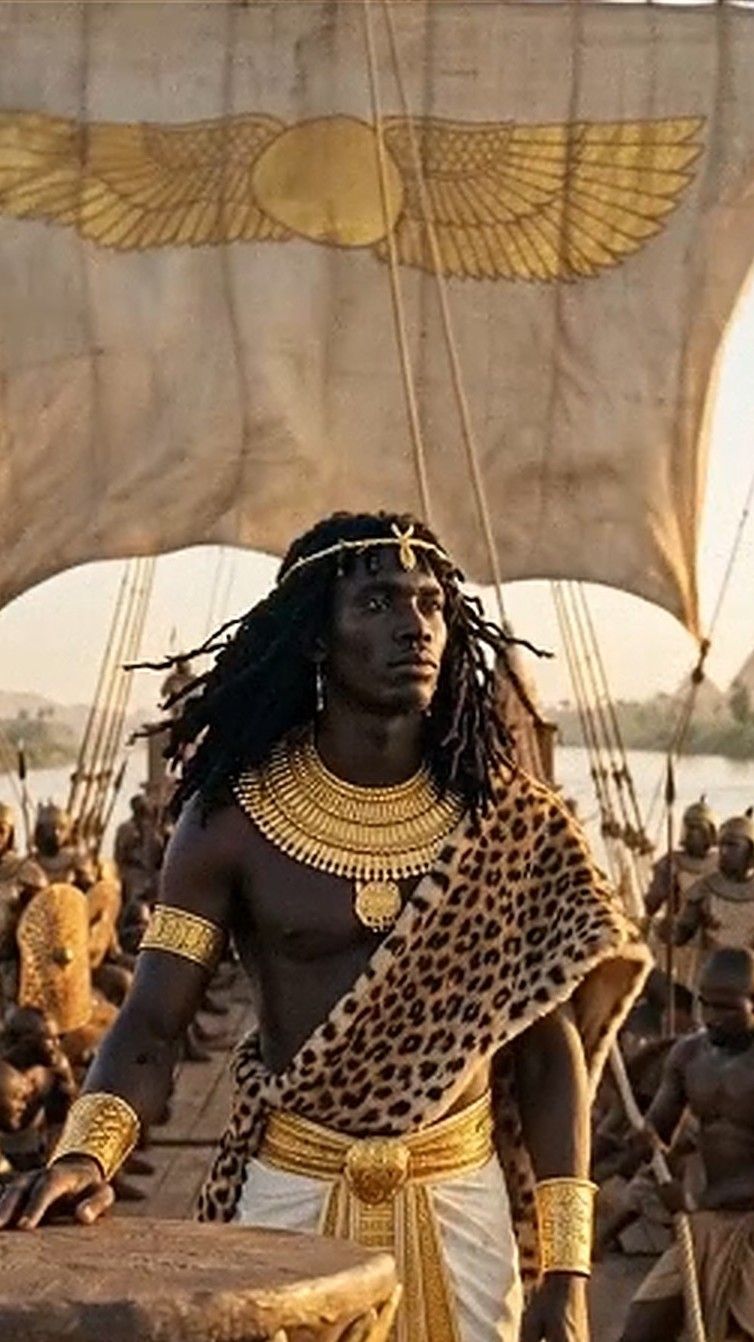
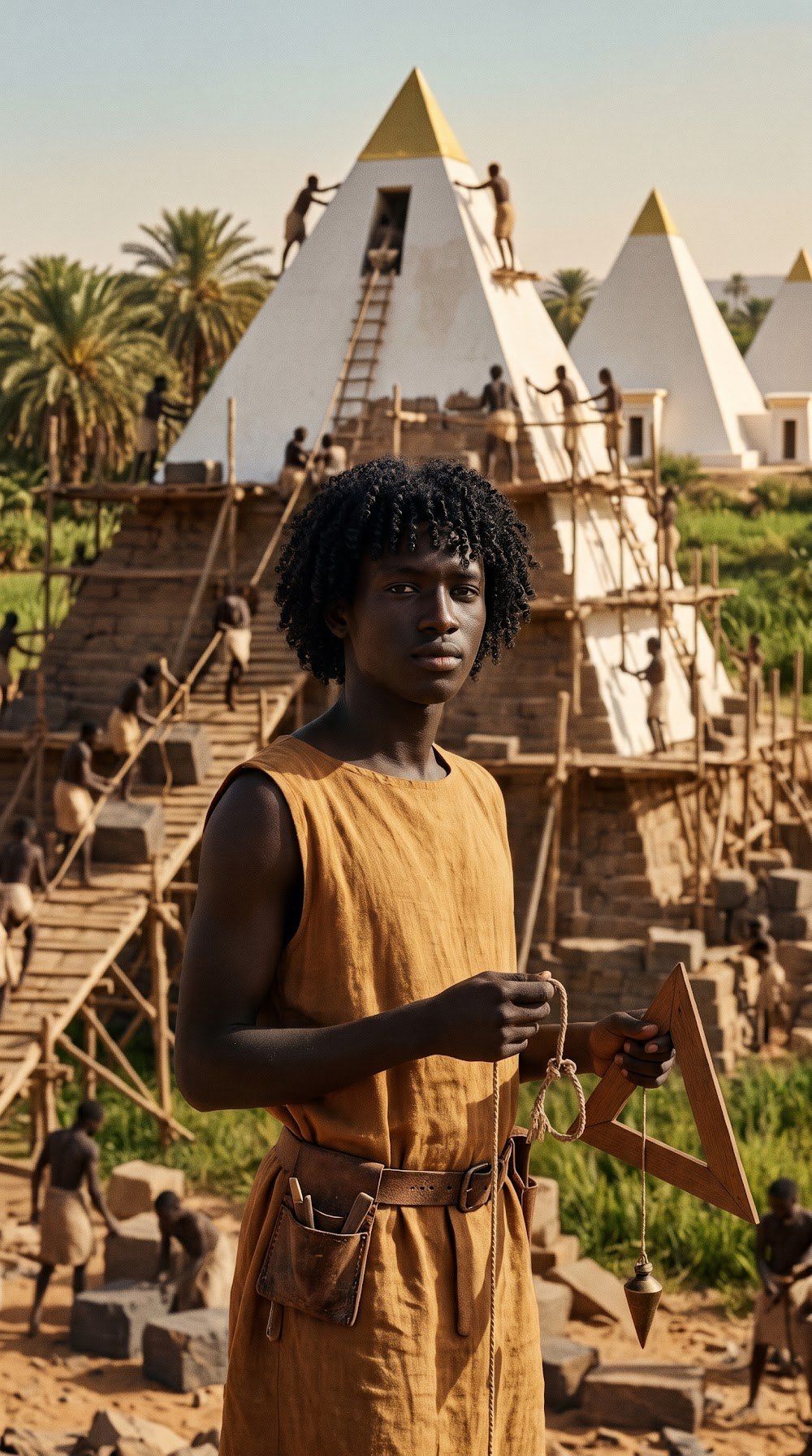
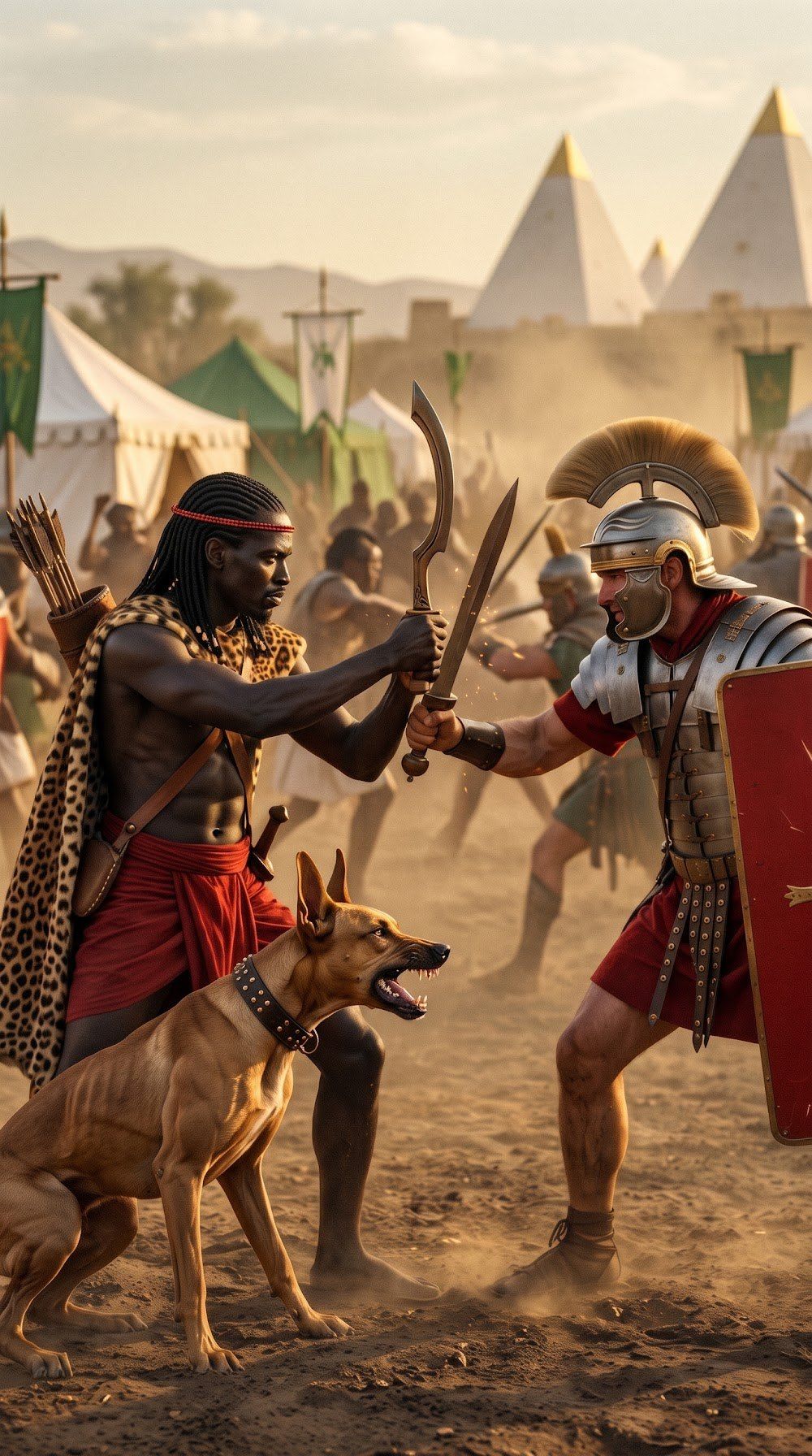
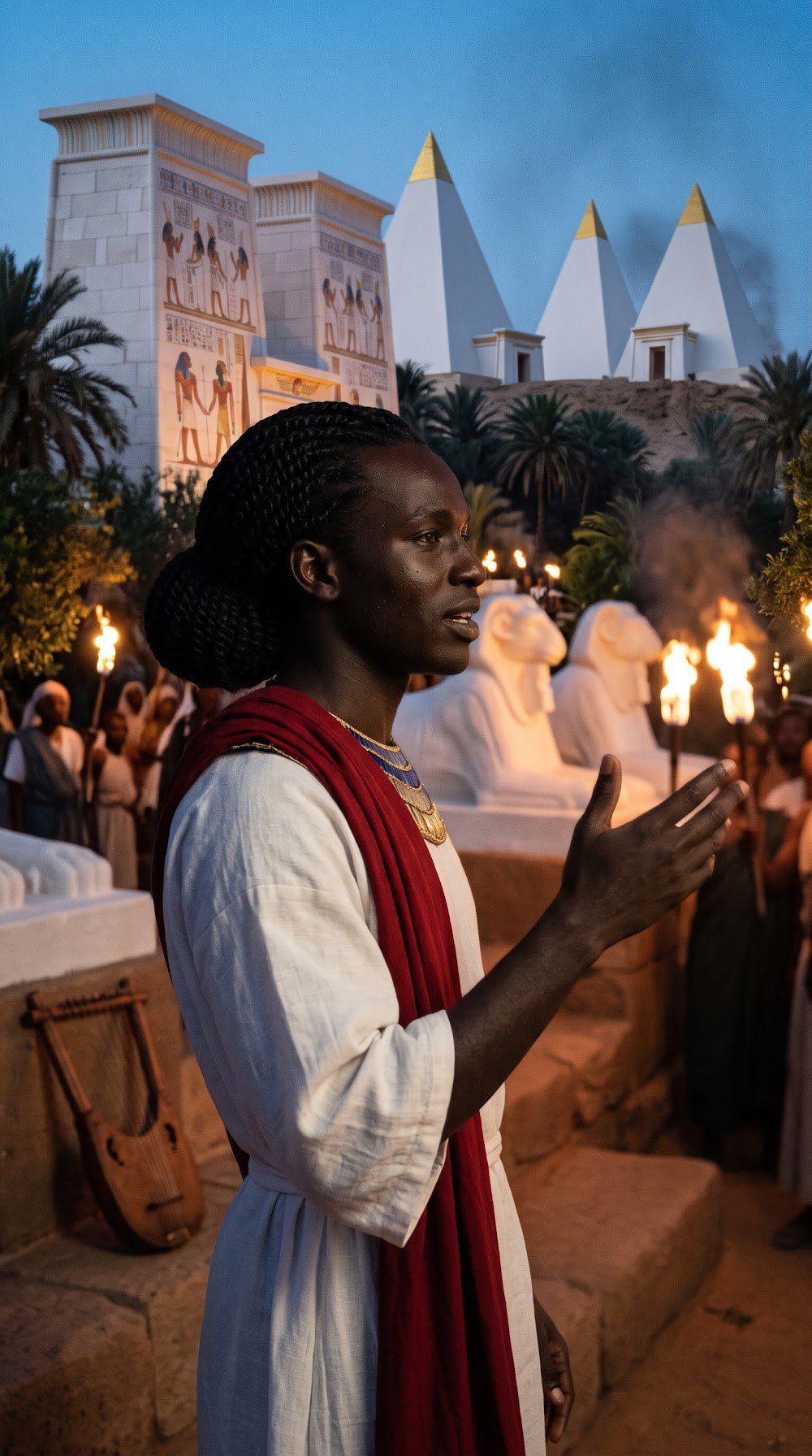
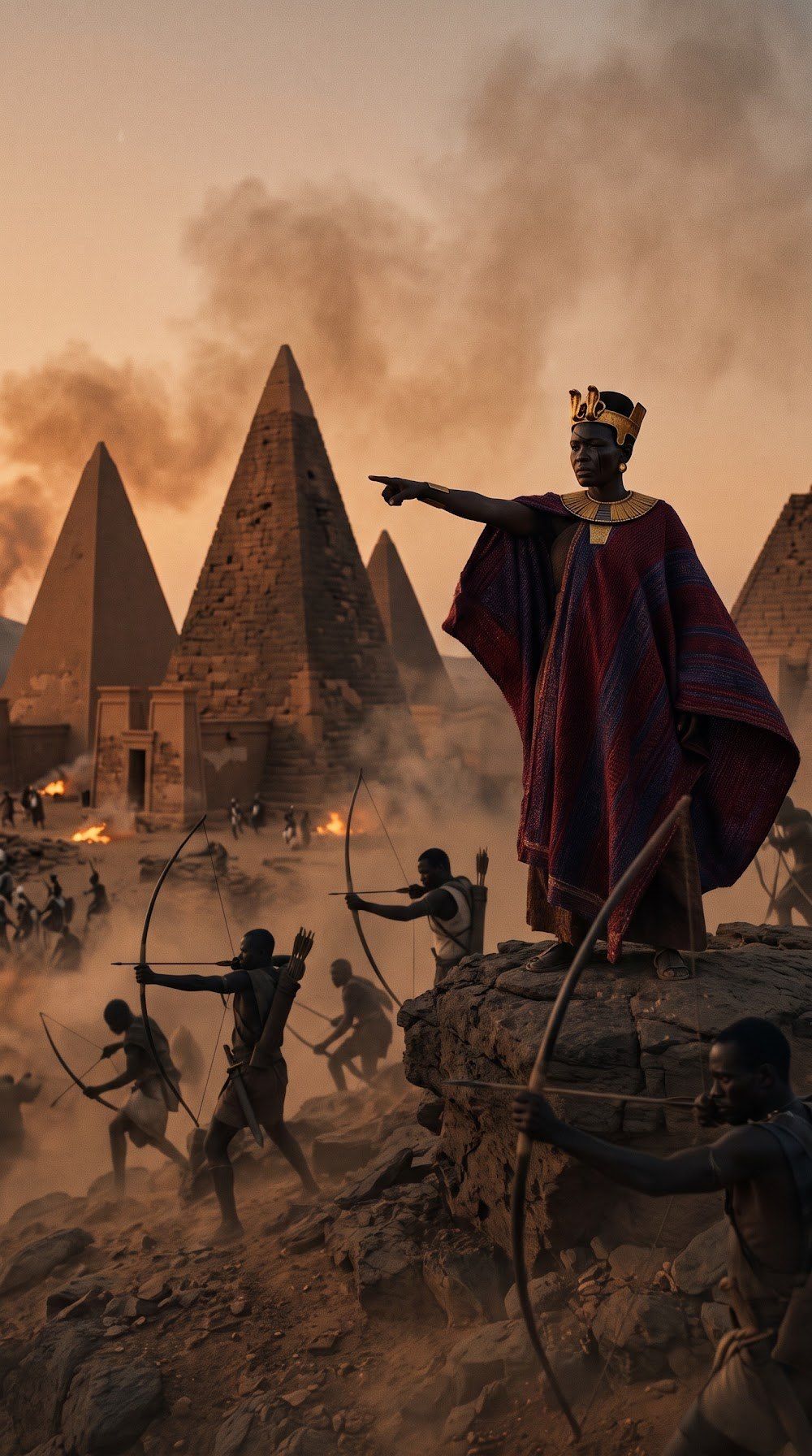
Illustrations from The Five Sons of Alkebulan by Paul Jackson. Artistic interpretations, not historical portraits. The linguist, writing at his table, joins the series in a coming installment.
We are complex beings. Whatever our pursuits, we must strive toward perfection.
Start with Nubia
Any honest look at the Nile Valley should begin upriver, in Nubia, the land along the Nile that stretched from Aswan in today's Egypt south toward Khartoum in Sudan. Geography shaped everything there. The river was the road, the calendar and the source of life; its cataracts, the rocky rapids that break the Nile's flow, made Nubia a gateway between Africa's interior and the Mediterranean world.
Nubia was home to three great Kushite kingdoms. The first had its capital at Kerma, from about 2500 to 1500 BCE. The second was centered on Napata, and the third on Meroë, which flourished from about 300 BCE to 300 CE.
The Kushites were builders on a grand scale. They left behind some 255 pyramids, more than twice the number Egypt built. Their kings, later called the Black Pharaohs, conquered Egypt in 747 BCE and ruled it for nearly a century as its 25th Dynasty.
Nubia was also a land of queens. The kandake Amanirenas led the army of Kush against Rome in a war that began in 25 BCE, then negotiated a peace with the emperor Augustus himself. The treaty is generally read by historians as a Kushite victory. A bronze head of Augustus, taken in the fighting, was buried beneath the steps of a temple at Meroë, where everyone who entered would walk over the emperor's face.
And Nubia still guards a mystery that calls for a linguist. Its people wrote in their own Meroitic script, which scholars can read aloud but still cannot fully understand. The language of Amanirenas remains largely undeciphered to this day.
Maat · Truth, balance, order, harmony, law, morality and justice; symbolized by an ostrich feather.
Kerma · First Kushite capital, about 2500 to 1500 BCE.
The 25th Dynasty · Kushite kings rule Egypt from 747 BCE for nearly a century.
Meroë · Kushite capital from about 300 BCE; home to Sudan's best-known pyramid fields.
Amanirenas · Kandake of Kush who fought Rome from 25 BCE and made peace with Augustus.
Built on the past, living in the present, aimed at the future
The great civilizations of the Nile Valley were among humanity's earliest achievements: writing, monumental architecture, astronomy, medicine, law and organized government. They were not built in a day, and they were not built by any one kind of person. They took navigators and builders, scribes and soldiers, leaders and queens, each working with rigor toward something larger than themselves.
That is the lesson Maat still offers. As human beings we build from the past, we live in the present, and we must be futuristic in our goals. Geography and thought carried the people of the Nile forward, and they can still carry us toward perfection and balance today.
Coming from THT Media Lab
A new educational series on our histories, beginning with the origins of the Nile Valley civilizations. Its aim: a deeper understanding of who we all are, and of what we can achieve through rigor and determined effort, to better not only ourselves but the lives of the people around us.
Historical details are drawn from published scholarship and reference sources, including National Geographic and World History Encyclopedia. Illustrations are from The Five Sons of Alkebulan by Paul Jackson and are artistic interpretations. Prepared by THT Education Desk with help from THT Media Lab, under the editorial direction of The Harlem Times.
Share this story and tag us: @HarlemTimesNews on X and @theharlemtimes on Instagram.