
The People of the State of New York v. the Ten-Dollar Deed
You thought you could get away with it… and you almost did.
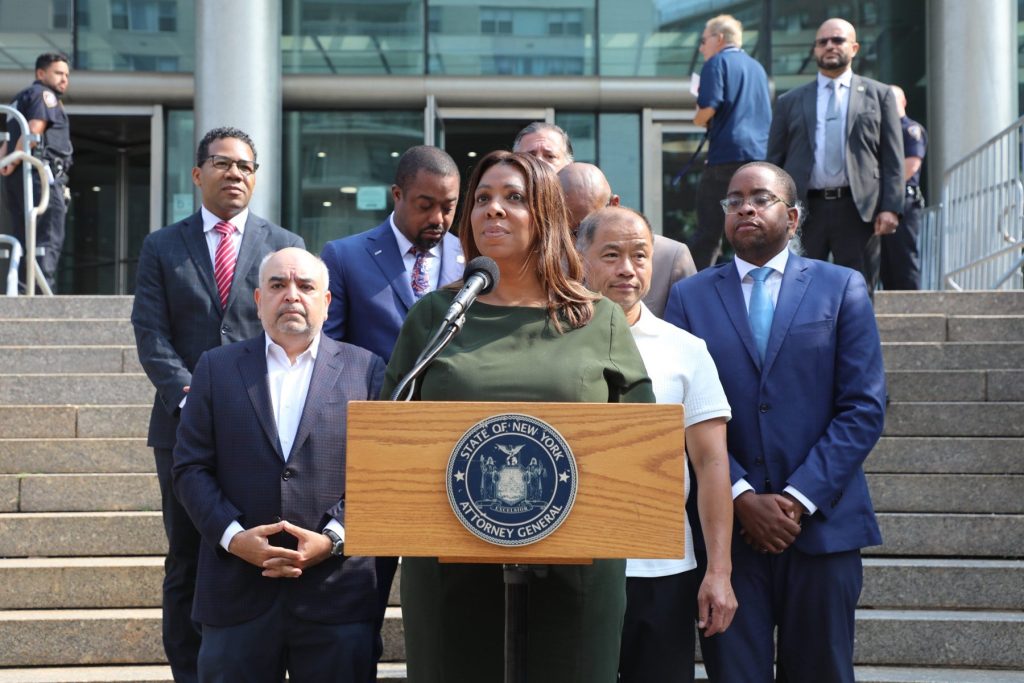
How a Long Island deed thief walked off with two Harlem brownstones on paper, and how Attorney General Letitia James walked him right back.
A note on sources: Statements in quotation marks attributed to Attorney General James, and the answers marked “The Attorney General’s office told The Harlem Times,” come from the Office of the New York State Attorney General.
Let me say this plainly: you do not steal a brownstone. You can’t fit one in a trunk. You can’t slip one under your coat on the way out of a party. And yet, for the better part of a decade, a man from Kings Point, Long Island, managed to walk off with two of them, on paper.
Price paid, according to his own state tax filings: ten dollars apiece. Value: about $4.7 million.
Pull up a stoop. This one is a caper.
Before the Caper · Harlem, 1904
First, a word about the stoop you’re sitting on
Every brownstone uptown carries a story older than the people living in it, and most New Yorkers have never heard it.
Those rowhouses weren’t built for us. In the late 1800s and early 1900s, real estate speculators threw up block after block of handsome brownstones and apartment houses, betting that the new subway would bring wealthy and middle-class white families streaming north. They bet too big. By the time the IRT opened in 1904, there were far more homes than buyers. The Harlem real estate bust of 1904–1905 left whole rows standing empty, owners desperate, and fine buildings one bad winter away from ruin.
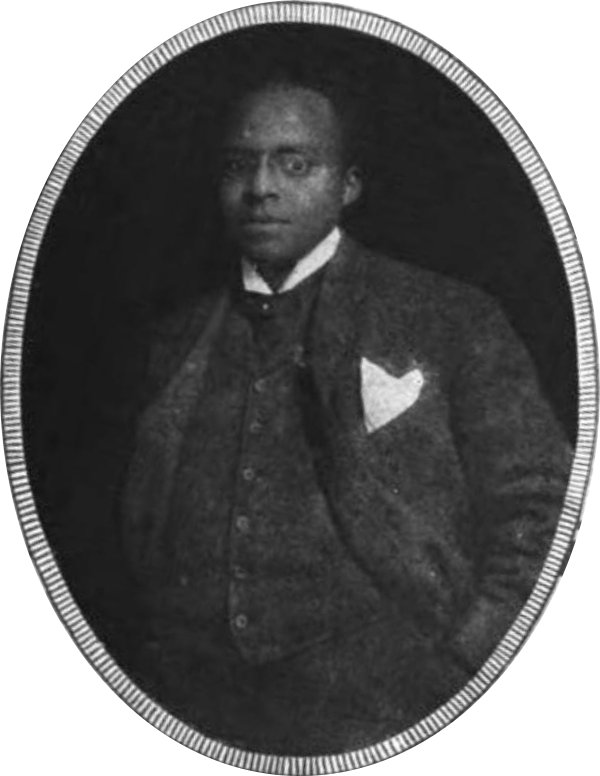
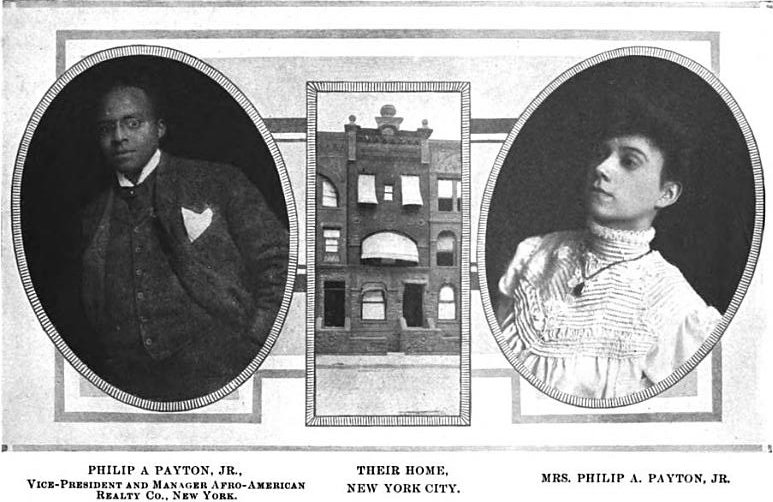
In walks a young man named Philip A. Payton Jr. Born in Westfield, Massachusetts, in 1876, he came to New York at 23, cut hair, worked as a porter in a real estate office, and paid attention. He loved his people and was proud to stand up for them. Where nervous landlords saw vacancies, Payton saw homes for Black New Yorkers (“colored” and “Negro” in the language of the day, and, by the way, we are still being reclassified) who were crammed into the worst housing in the city and shut out of the rest. On June 15, 1904, he chartered the Afro-American Realty Company, selling shares at $10 apiece (hold that number), and began filling Harlem’s empty luxury buildings with Black families, building by building, block by block. History calls him the Father of Harlem. He lived in fine style himself at 13 West 131st Street. Remember that street. It comes back.
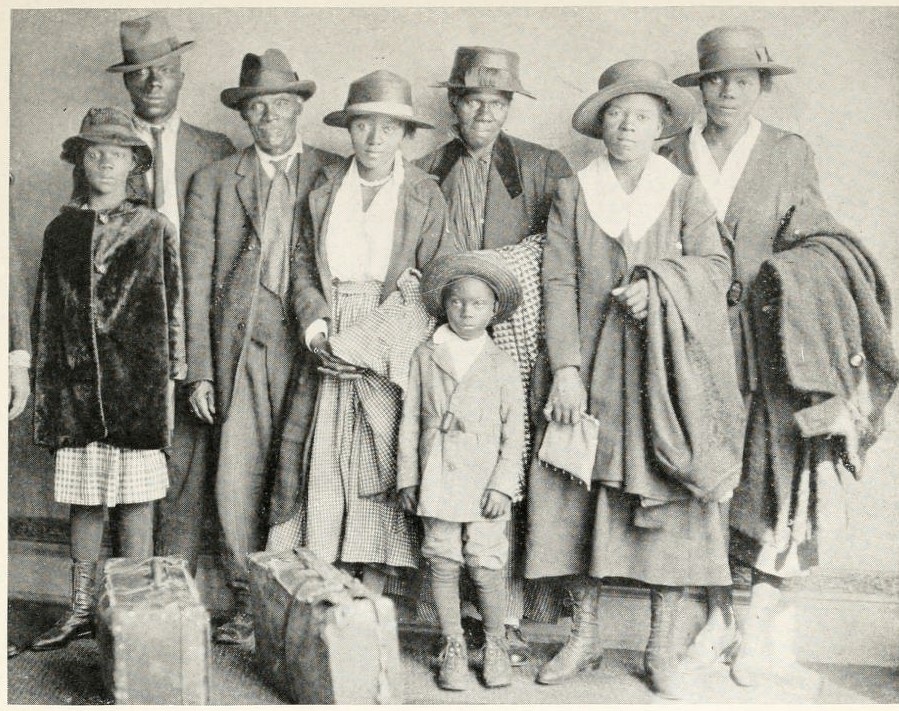
Then came the Great Migration. From the 1910s on, hundreds of thousands of Black Southerners packed up and boarded trains north, joined by newcomers from the Caribbean. The buildings Payton opened became their landing place, and by the 1920s Harlem was the capital of Black America: its churches, its newspapers, its music and its brownstones.
Those homes have stood the test of time. They weathered the Great Depression. They weathered the long years of disinvestment, when owners fell behind and the city took title for unpaid taxes. By 1982, the City of New York owned roughly 60 percent of Harlem’s residential property, including nearly 300 brownstones and townhouses. That year the city raffled off a dozen of them by lottery, for roughly $5,000 to $42,000 each. In the years that followed, city-owned buildings and lots were handed to developers for a dollar apiece in exchange for promises to renovate.
Ask the old-timers and you’ll hear the rest of it: that past administrations let these houses fall apart until they could be passed downtown for a song, and that word of the giveaways reached the big downtown papers long before it reached the publications that had been covering Harlem all along. We’ll let history settle that argument. What nobody disputes is this: the brownstone became the anchor of Harlem’s real estate and of its families, the deed in the drawer that turned hard decades into generational wealth. Today those same houses, many now in stages of revitalization, sell for millions.
From the Archive
The Father of Harlem
Philip A. Payton Jr.’s story, from ReasonTV.
The Great Migration
Dr. Henry Louis Gates Jr. on the first wave of the Great Migration, from PBS’s Great Migrations: A People on the Move.
Harlem in the 1930s
Street life uptown in the 1930s, from the British Pathé archive.
Which brings us to our man.
The Caper
Not just any old theft
As stealing brownstones goes, this has to be one of the most egregious.
Case No. 1420/21 · Persons of Interest
The Cast
The thief: Joseph Makhani, 63, of Kings Point, Long Island. His tangles over real estate reach back to the 1990s; in 2008, three companies the Attorney General’s office says he owned pleaded guilty to falsifying business records.
The houses: 107 West 118th Street, and 135 West 131st Street, a short stroll from Philip Payton’s old front door.
The rightful owner: Veronica Palmer, an elderly woman who, according to published reports, bought 107 West 118th Street in 1985.
The good guys: Attorney General Letitia James and her Real Estate Enforcement Unit and Public Integrity Bureau.
Act I · Exhibit A
The ten-dollar house
Beginning in 2012, prosecutors proved, Makhani used fraudulent deeds, false documents and a lineup of shell companies to take 107 West 118th Street from its elderly, vulnerable owner. One of his corporations told the state it paid $10 for the place. Ten. Dollars. That’s not a brownstone. That’s lunch.
Funny thing, though: when it came time to borrow against the house, the price went up. On a mortgage application he claimed he had paid $975,000 and landed a $650,000 construction loan, then refinanced into a $1.2 million long-term mortgage. He even filed a forged application with the city’s housing agency, HPD, to turn the building into market-rate rentals.
Act II · Exhibit B
Collect the rent
From 2016 to 2023, the apartments rented for up to $3,400 a month, more than $12,000 a month rolling in. Ms. Palmer received none of it. She spent years in a homeless shelter while a stranger cashed checks on her house. By 2023, the home was worth about $2.9 million.
The comedy stops here for a moment. A woman who owned a Harlem brownstone ended up homeless because of a forged piece of paper. Let that sit.
Act III · Exhibit C
The job offer that wasn’t
Over on West 131st Street, the last genuine deed was recorded in 1975 by an elderly owner who died soon after. Around 2012, Makhani told a tenant he had bought the building and, under the pretense of offering the man a job, got his signature. That signature then showed up on a deed naming the tenant as the owner. Abracadabra: the property slid into a company Makhani controlled.
In 2013, that company sued to evict the tenants. Bad move. Once you walk into housing court, people start asking who exactly owns the building. So Makhani filed a second fake deed, this one claiming the heirs of the 1975 owner had handed the house over to him. Meanwhile, HPD sued over the building’s condition (a roof that needed replacing, wiring that needed upgrading, rodents and roaches with no plan to get rid of them) and in 2015 won a judgment of more than $1 million. Makhani walked away from the house, and the city took it over unpaid tax liens in 2018.
Act IV · Exhibit D
The great escape (almost)
In 2021, Attorney General James indicted him. And here is where our man nearly drove off into the sunset. His lawyers argued the case had come to the Attorney General through the wrong door: a referral from the state court system, rather than from an agency with the legal power to hand her a criminal case. On November 17, 2022, four years ago this week, a state appeals court agreed, and the indictment was gone. His lawyer told the papers the case had been rightly dismissed. The tabloids had a field day.
Somewhere in Kings Point, you have to imagine, a man put his feet up.
Act V · Exhibit E
She came back

July 2023. Attorney General James indicted him again, this time on footing that held. In 2024, a court rejected his bid to toss that case too. After a seven-week trial, on July 1, 2026, a jury found him guilty of two counts of criminal possession of stolen property in the first degree and one count of scheme to defraud in the first degree, and he was taken into custody.
On November 10, Justice Michele Rodney of New York State Supreme Court sentenced him to a combined seven to 21 years in state prison and ordered him to pay $500,000 in restitution to Flushing Bank by May 7, 2027.
Ten dollars, meet seven to 21 years.
Credit where it’s due: Detectives Angel Laporte and Teresa Russo built the case. Assistant Attorneys General Nazy Modiri and Matthew Luongo tried it, with Senior Counsel Gabriel Tapalaga and Gary Fishman. Principal Auditor Investigator Dmitry Temis followed the money.
The Epilogue
The last scene hasn’t been filmed yet
The house on West 118th Street is not home free. A court still has to decide whether to wipe out the deeds and the mortgage Makhani recorded against it.
The Attorney General’s office told The Harlem Times: “At the next hearing, which has not yet been scheduled, a judge will determine whether to vacate the deeds and the mortgage recorded against 107 West 118th Street. If the deeds are vacated, legal ownership of the home automatically reverts to the rightful owner, Veronica Palmer, because the voided documents are treated as if they never existed.”
As if they never existed. That’s the ending we’re rooting for.
Who gets targeted? The Attorney General’s office told The Harlem Times: “Any homeowner can be a victim of deed theft, but criminals primarily target abandoned or empty properties, properties in foreclosure or with tax or utility liens, and properties where the original homeowner is deceased and the heirs do not legally have a transfer title to the property.”
What should a family do this week? The Attorney General’s office told The Harlem Times: “The most important thing New Yorkers can do to protect themselves from deed theft is to educate themselves about what deed theft is [and] how to recognize it.” The office says it hosts deed theft education and prevention workshops across the city, has canvassed neighborhoods where deed theft is rampant, and keeps an online guide for homeowners.
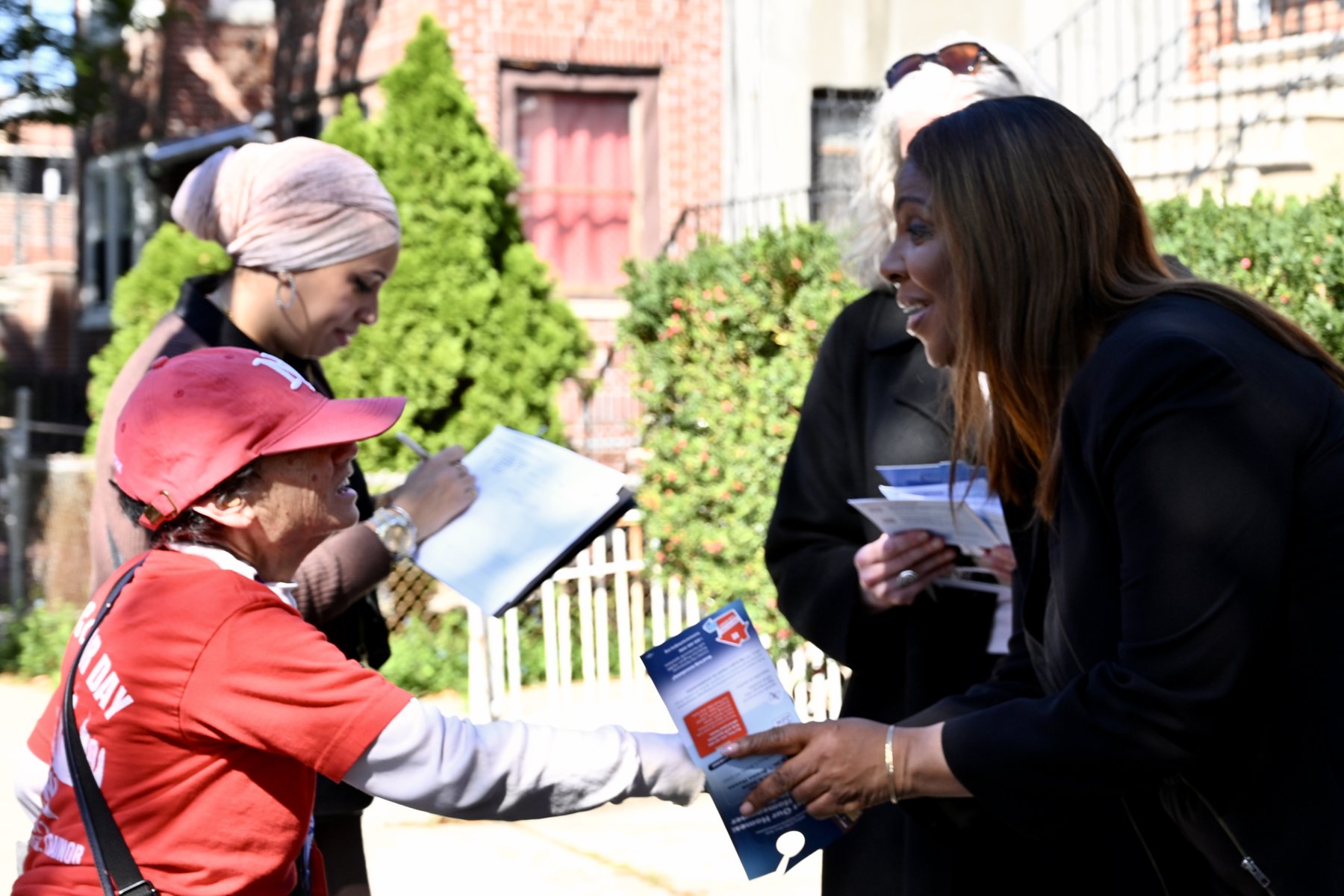
Homeowner Checklist
How not to star in the sequel
The Attorney General’s office shared these tips with The Harlem Times, for churches, block associations and community boards to pass along:
Get help from your own lawyer or a free service like the Homeowner Protection Program (HOPP). Do not hire a lawyer referred to you by someone who might have an interest in your property, such as a realtor.
Legitimate organizations will not ask you to transfer your property rights or promise that you can buy your property back.
Beware of upfront fees for a loan modification. These are almost always illegal.
Never transfer your deed or ownership without your own attorney’s advice.
Have a will. Deed thieves often target homes where the owner died years ago and the heirs never transferred the title.
Do not abandon your property. Take care of it yourself or ask someone to look after it.
Read everything. Never sign anything you do not understand.
Keep up with your mortgage, property tax and utility payments. If you can’t, reach out to HOPP.
Contact your county clerk to check on your property records.
If you think your home has been stolen: call the Attorney General’s office at 1-800-771-7755, email deedtheft@ag.ny.gov, or file a confidential complaint at ag.ny.gov. For free housing counseling and legal help, call HOPP at 1-855-466-3456.
Read the AG’s Homeowner GuideThe Verdict
The Harlem Times’ take
The Ashanti say: the ruin of a nation begins in the homes of its people. The reverse is just as true. A people rises from its homes. Philip Payton understood that in 1904. Veronica Palmer understood it when she bought her house. Joseph Makhani understood it too, which is exactly why he went after one.
We are thinking, feeling, willing people, and knowing what we hold is part of holding it. So know your deed. Check your records. Write the will. Sit down with your elders this Thanksgiving and ask the question nobody likes to ask: whose name is on the house? The brownstones have outlasted a crash, a Depression and a city that once sold them off by lottery. With a little vigilance, they’ll outlast the deed thieves too.
And to anyone still thinking a Harlem brownstone is a ten-dollar bargain: you almost got away with it. Almost.
Share this story and tag us: @HarlemTimesNews on X and @theharlemtimes on Instagram.