
By Paul Jackson
An old Swahili proverb says heshima si utumwa: respect is not slavery. To honor another person costs you nothing of your own dignity. That wisdom describes the Paul Robeson that Vernoca L. Michael knew: a man who would not bow to a congressional committee, but rose to bow to a little girl.
To the world he was a giant: an All-American athlete, a Rutgers valedictorian, a lawyer, a linguist, the voice behind “Ol’ Man River,” and a man who would not bend before the House Un-American Activities Committee. To Ms. Michael, he was simply “Uncle Paul.”
Ahead of Paul Robeson: A Night of Elegance on February 4, The Harlem Times asked Ms. Michael to share what she remembers. Our questions appear in bold. Every answer is in her own words.
The Harlem Times: How did you first meet Paul Robeson, and when and where did your connection begin?
Vernoca L. Michael: Our families were connected before I was born. My father and Paul’s brother, Ben, were so close that family members referred to them as “the twins,” so I grew up always knowing him as “Uncle Paul.” Whenever we traveled to the city from Poughkeepsie, we would visit Uncle Paul and Uncle Ben.
The Harlem Times: What do you remember most about him as a person, beyond his public life and stage presence?
Vernoca L. Michael: I remember Uncle Paul as a remarkably kind and warm person. He used to sit or rock on the porch of 4951 Walnut Street, friendly and welcoming, acknowledging people as they passed by—most of whom had no idea who he actually was.
The Harlem Times: Is there a specific moment with him that has stayed with you over the years?
Vernoca L. Michael: Whenever I opened the front door and Uncle Paul was sitting on the living room couch, he would stand up, bow gracefully from the waist, and greet me: “Good morning, Vernoca.” I always loved that he greeted me with such respect and warmth.
The Harlem Times: He paid a heavy price for speaking out. What did you witness of that experience up close?
Vernoca L. Michael: Growing up, I remember quiet, serious conversations among the adults that we were instructed never to share outside the house. Later, when he moved to Philadelphia, we lived diagonally across the street on Walnut Street. I saw figures like Ossie Davis, Ruby Dee, and Harry Belafonte come to visit him. When local hotels were unavailable, Aunt Marian would call my parents to see if we had spare rooms. I often gave up my own bedroom for his guests, but it was a pleasure seeing how much joy everyone experienced simply being in his presence.
Although he was just my uncle to me, I could see the pain and intensity in his expression when he spoke about his experiences in Cuba, England, and appearing before the House Un-American Activities Committee. Despite everything, he remained resilient. He also spoke with immense reverence about his father, Rev. Drew Robeson, whom both he and Aunt Marian idolized.
I also recall my mother, a former concert artist, coming over to vocalize with him. On a lighter note, when I bought my first car with my own savings, my parents made me swap my choice of a Corvette for a Chevy Camaro so that both my boyfriend and Uncle Paul could fit comfortably, as I was to be the designated driver!
The Harlem Times: What do you hope readers, especially young New Yorkers, take away from his life today?
Vernoca L. Michael: I hope people of all generations remember that he was one of the greatest entertainers in the world—an actor, singer, orator, activist, lawyer, author, linguist, athlete, scholar, and a true pioneer; the quintessential father of the Civil Rights Movement. He sacrificed so much to challenge systemic injustice so that future generations could thrive. I also hope people remember the powerhouse beside him: his wife, manager, and director, Eslanda Goode Robeson.
The Harlem Times reflects
The man who stood before Congress and refused to apologize for loving his people is the same man who rose from a couch to bow to a young girl. Those are not two Robesons. Dignity that is real does not change size depending on the room.
The house at 4951 Walnut Street is now the Paul Robeson House & Museum in West Philadelphia, and the porch Ms. Michael remembers still faces the street. New Yorkers can meet Robeson’s voice again on February 4, when bass-baritone Kevin Maynor performs Paul Robeson: A Night of Elegance at the White Plains Performing Arts Center. The Harlem Times is a proud sponsor. Read our earlier feature: They Took His Passport. They Couldn’t Take His Voice.
Get tickets: Paul Robeson: A Night of Elegance
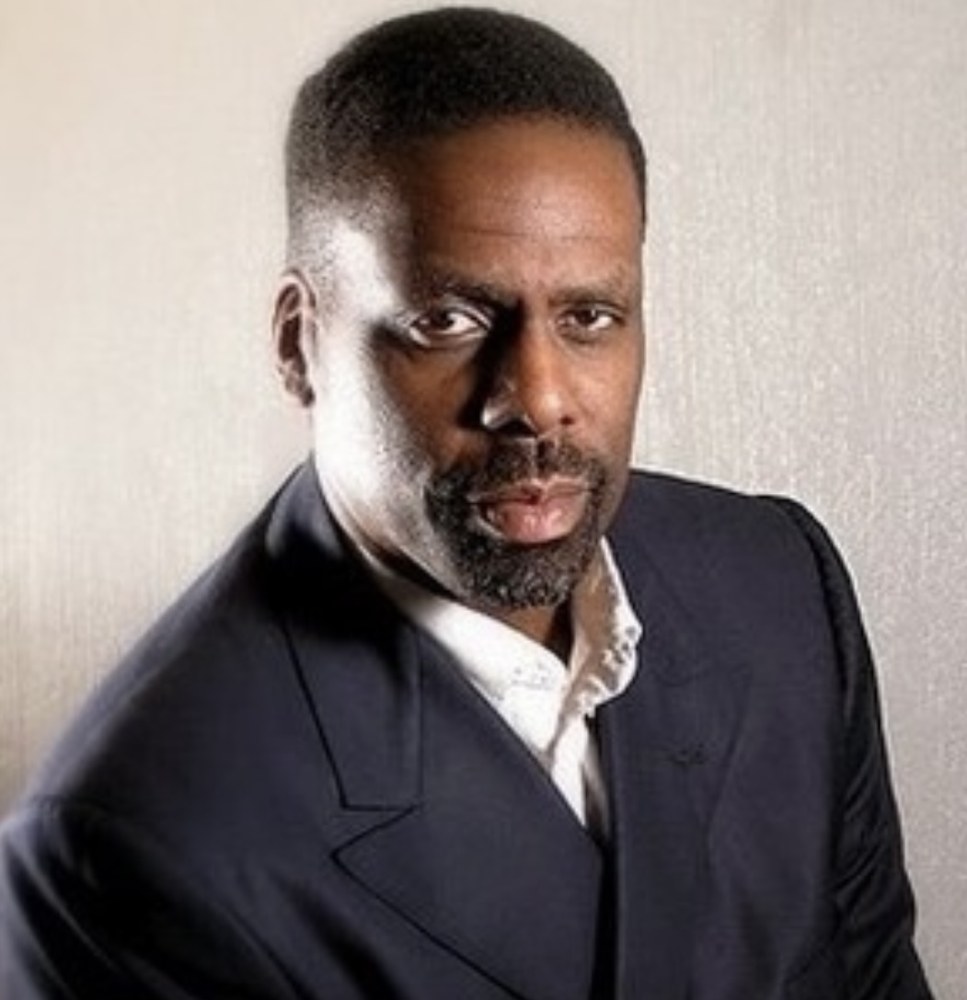
Photo: Kevin Maynor, who brings Robeson to the stage February 4. Courtesy S. Clark Production Enterprises.
Share this story and tag @HarlemTimesNews on X and @theharlemtimes on Instagram.