
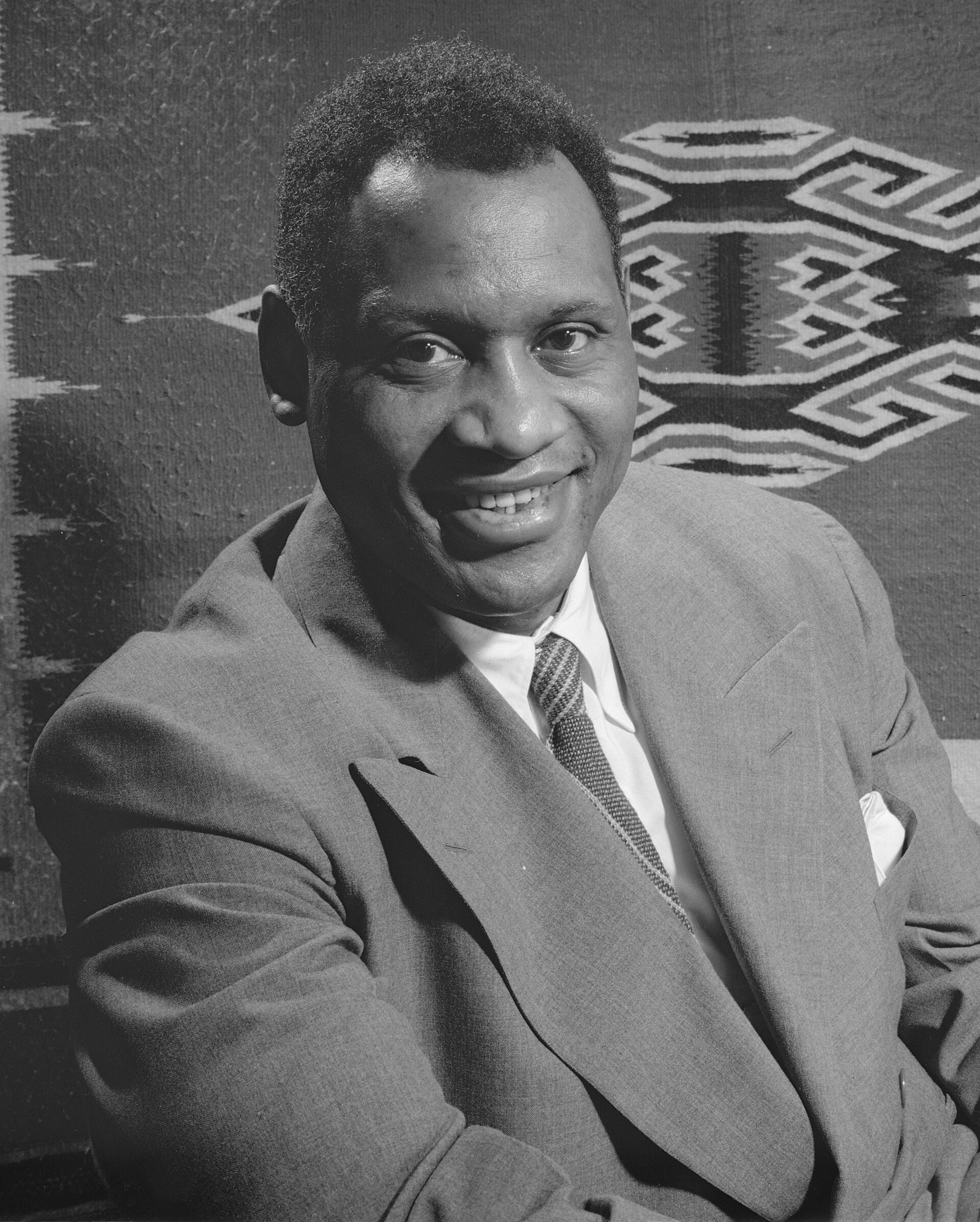
They took his passport. They could not take his voice.
Paul Robeson was the son of a man who escaped slavery. He became an All-American athlete, a lawyer, a star of stage and screen, and one of the great bass voices of the 20th century. Then his own country tried to silence him. On February 4, 2027, that voice rises again in White Plains. Here is his story, in pictures and in song.
Thursday, February 4, 2027 · 7:00 p.m. · White Plains Performing Arts Center
Get TicketsOverture: “Ol’ Man River,” Show Boat (1936)
Press play, and let the voice that moved the world carry you through his life.
Act I · The Beginning · 1898–1927
A preacher’s son from Princeton
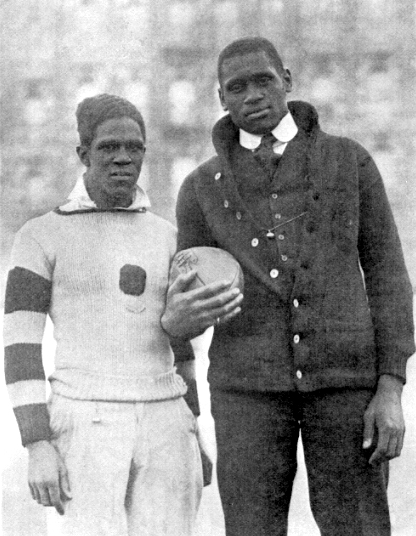
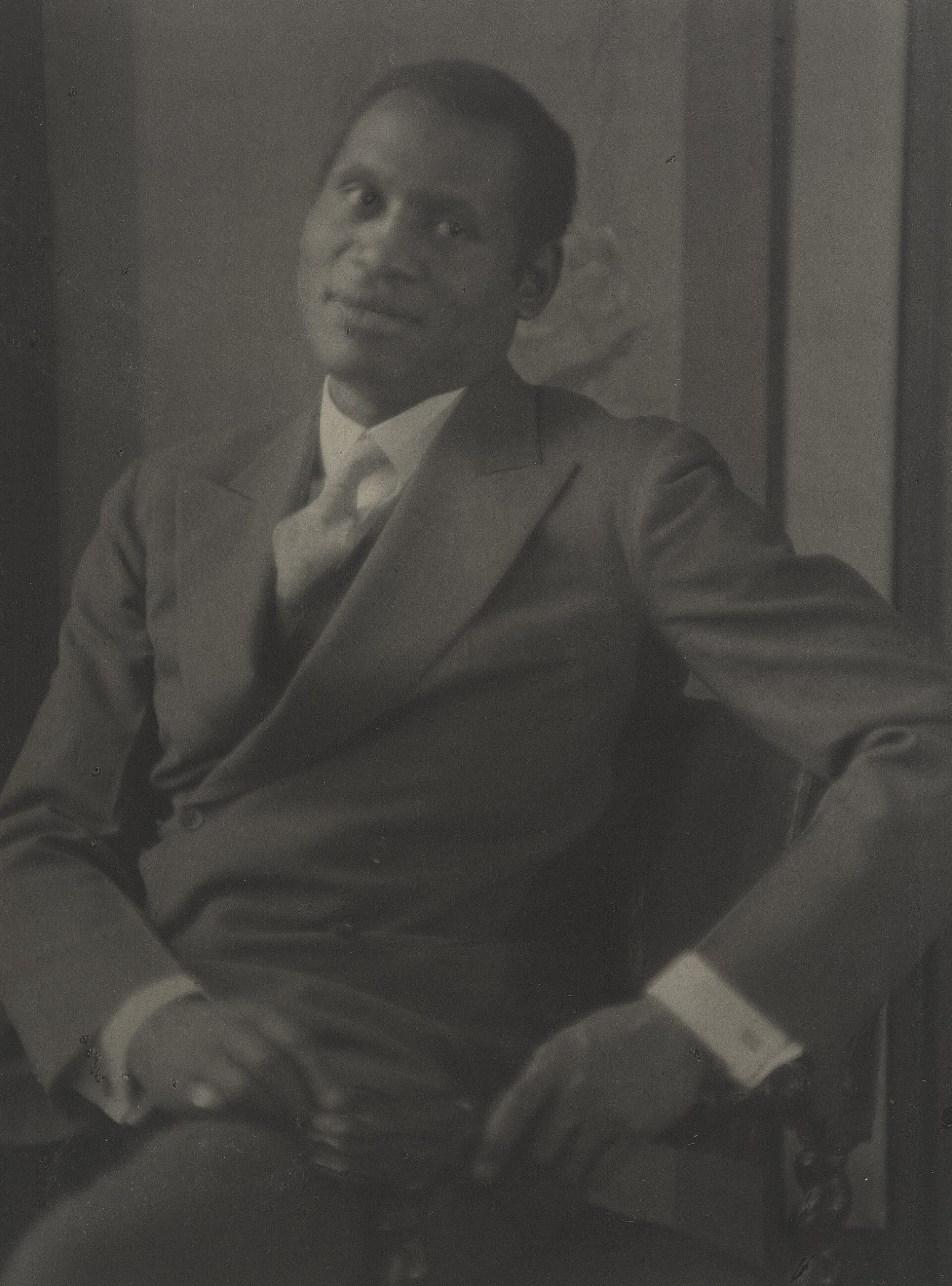
Paul Leroy Robeson was born in Princeton, New Jersey, on April 9, 1898. His father, the Rev. William Drew Robeson, had escaped slavery as a young man and became a minister. The spirituals of his father’s church were the first music his son ever knew.
At Rutgers he was only the third Black student ever admitted, and he gave the school everything: two-time All-American on the football field, Phi Beta Kappa and class valedictorian in 1919. He paid his way through Columbia Law School playing professional football, then walked away from the law after a white secretary at his firm refused to take dictation from him. He came home to Harlem, to the stage, and to his voice.
“Go Down Moses”
The spiritual of his father’s church, a song about a people demanding freedom, became one of his signatures.
Act II · The Trials · 1939–1956
The world’s favorite voice, and his country’s target
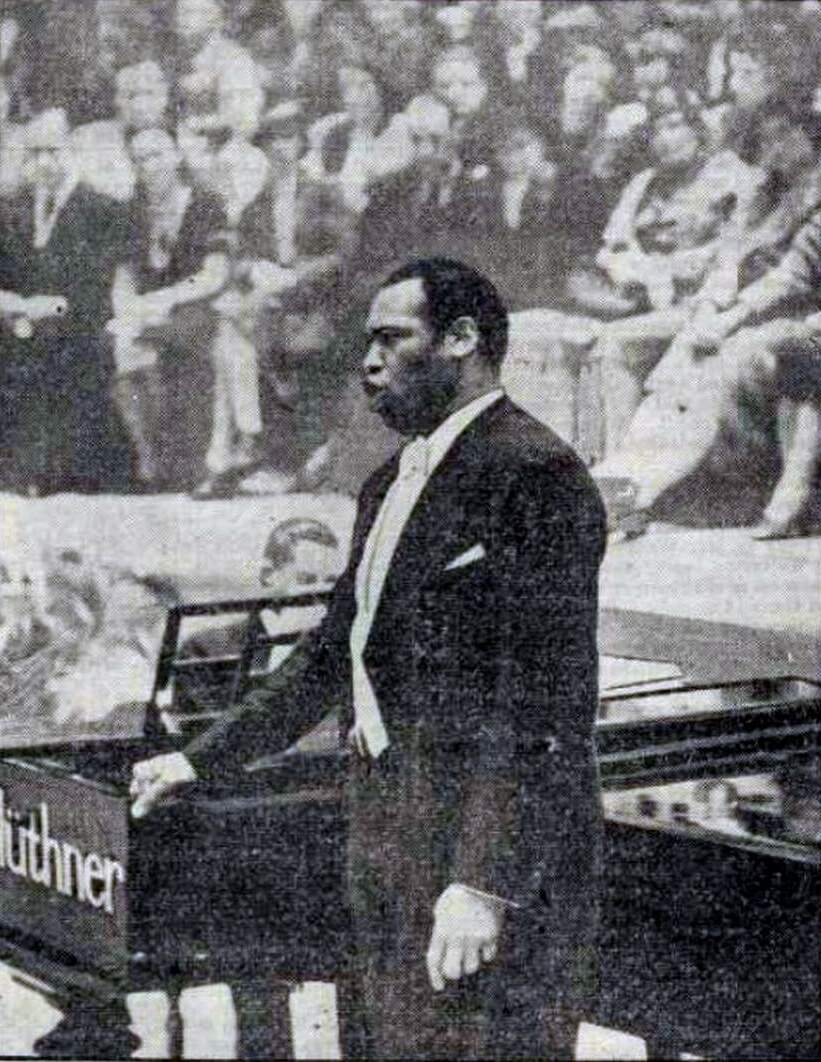
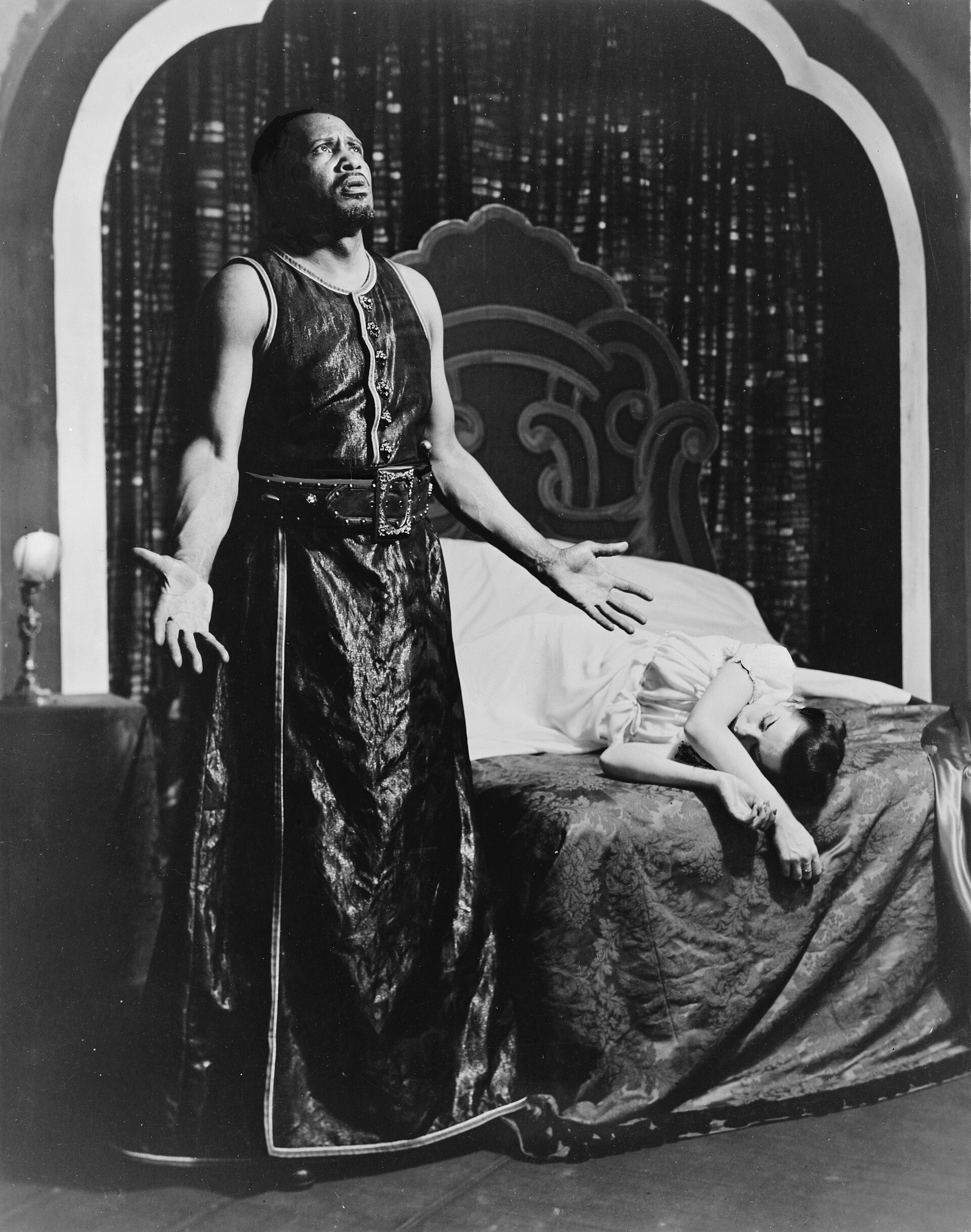
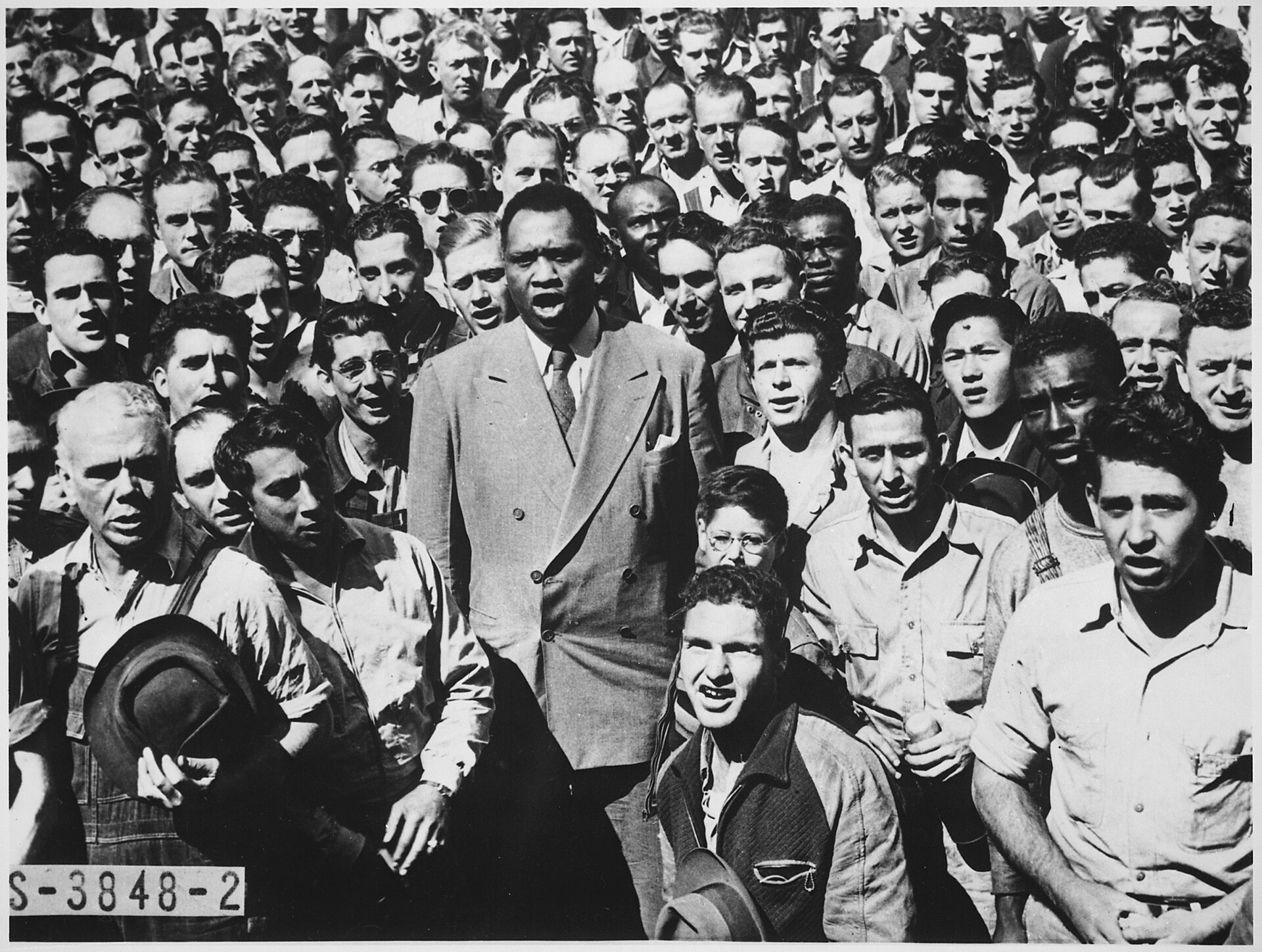
By the 1940s he was among the most famous Americans alive. His Othello became the longest-running Shakespeare production in Broadway history. During World War II he sang for the workers building the ships and planes that won it.
But Robeson would not stay quiet about lynching, segregation and the colonial rule of Africa, and he spoke warmly of the Soviet Union. When the Cold War came, his country turned on him. In 1949 mobs attacked concertgoers at his outdoor concert in Peekskill, New York. In 1950 the State Department revoked his passport. Concert halls closed their doors, his records disappeared from stores, and his income collapsed. Called before the House Un-American Activities Committee in 1956, he refused to bow and told the congressmen that they were the un-Americans.
“Joe Hill,” sung for Scottish miners (1949)
In the spring of 1949, the year of Peekskill, Robeson visited a colliery near Edinburgh and sang for the miners in their canteen.
Act III · The Triumph · 1958
The return
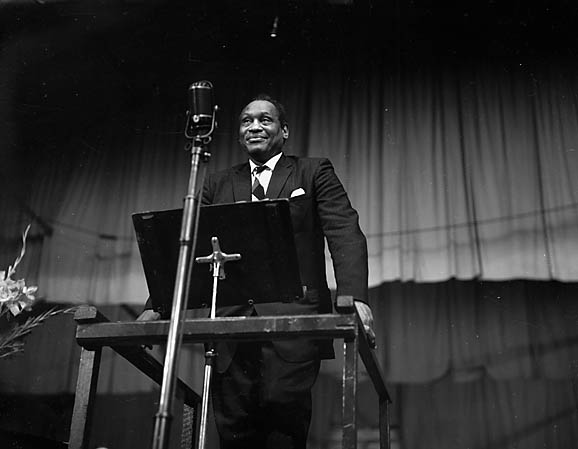
They could ban him from the stage, but they could not stop him singing. In 1957, barred from leaving the country, he sang to Welsh miners over a transatlantic telephone line.
In May 1958, at age 60, he walked back onto the stage of Carnegie Hall for the first time in 11 years and sang to a sold-out house, with police posted outside. Weeks later the Supreme Court ruled that the State Department could not deny Americans passports for their beliefs, and Robeson had his passport back. He took his voice back to the world: Britain, Europe, the Soviet Union and Australia. He died in Philadelphia on January 23, 1976, unbowed.
“Ol’ Man River,” live at Carnegie Hall (1958)
Listen for the difference from 1936. In concert he rewrote the song’s lines of resignation into a vow to keep fighting.
Encore: the man bringing Robeson back to life
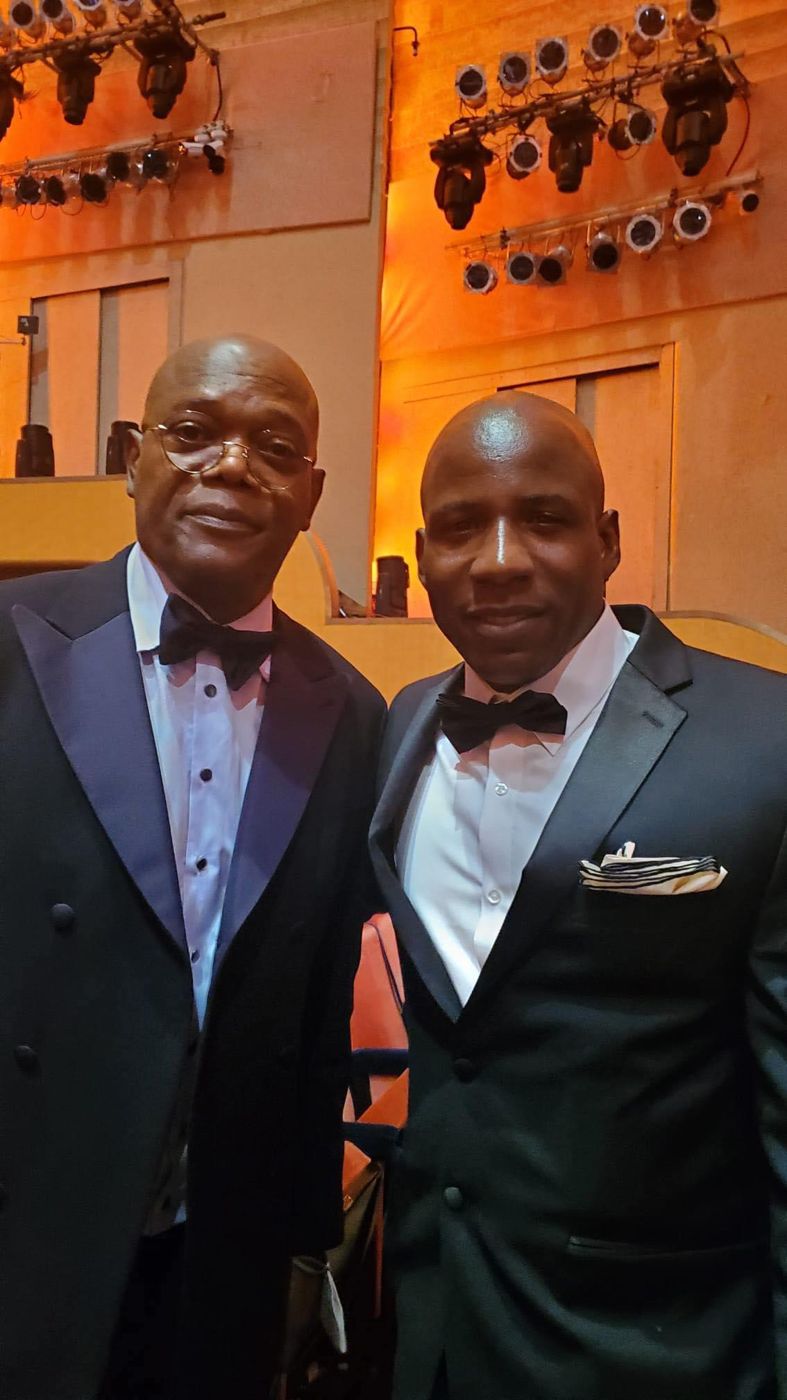
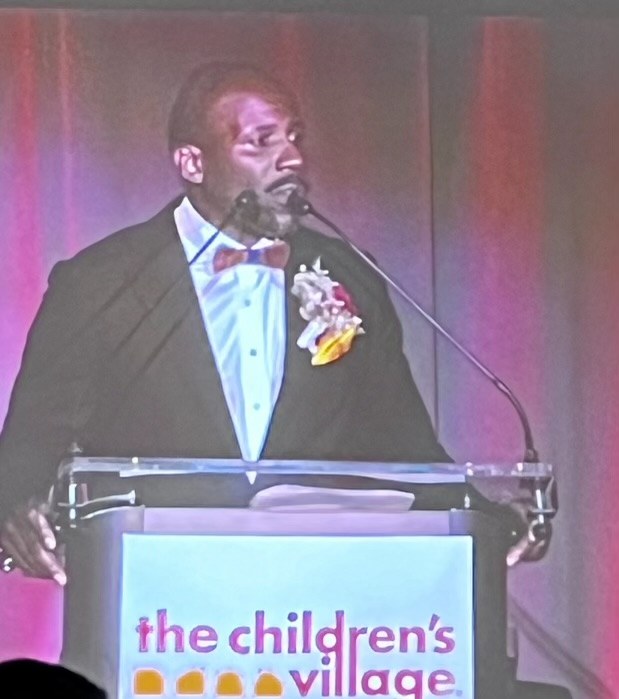
Robeson’s story is about a man who refused to let his circumstances write his ending. So is the story of the man putting him back on stage.
As a teenager, Shabaya Clark was a resident of the Children’s Village, the Westchester agency that cares for young people in crisis. According to his company, theatre changed the direction of his life. He trained at the New Federal Theatre and HB Studio, acted in films including Ramsey, and founded Drama Free! Theatre Arts and Education Program, which uses acting and mentorship to help young people across the tri-state area, many of them carrying trauma, find their voices and rewrite their own stories.
In 2024 the Children’s Village, the place that once took him in, honored him with its Legacy of Service Award. This year he received Congressman Mike Lawler’s Changemaker Award. Now his company, S. Clark Production Enterprises, is presenting Paul Robeson: A Night of Elegance.
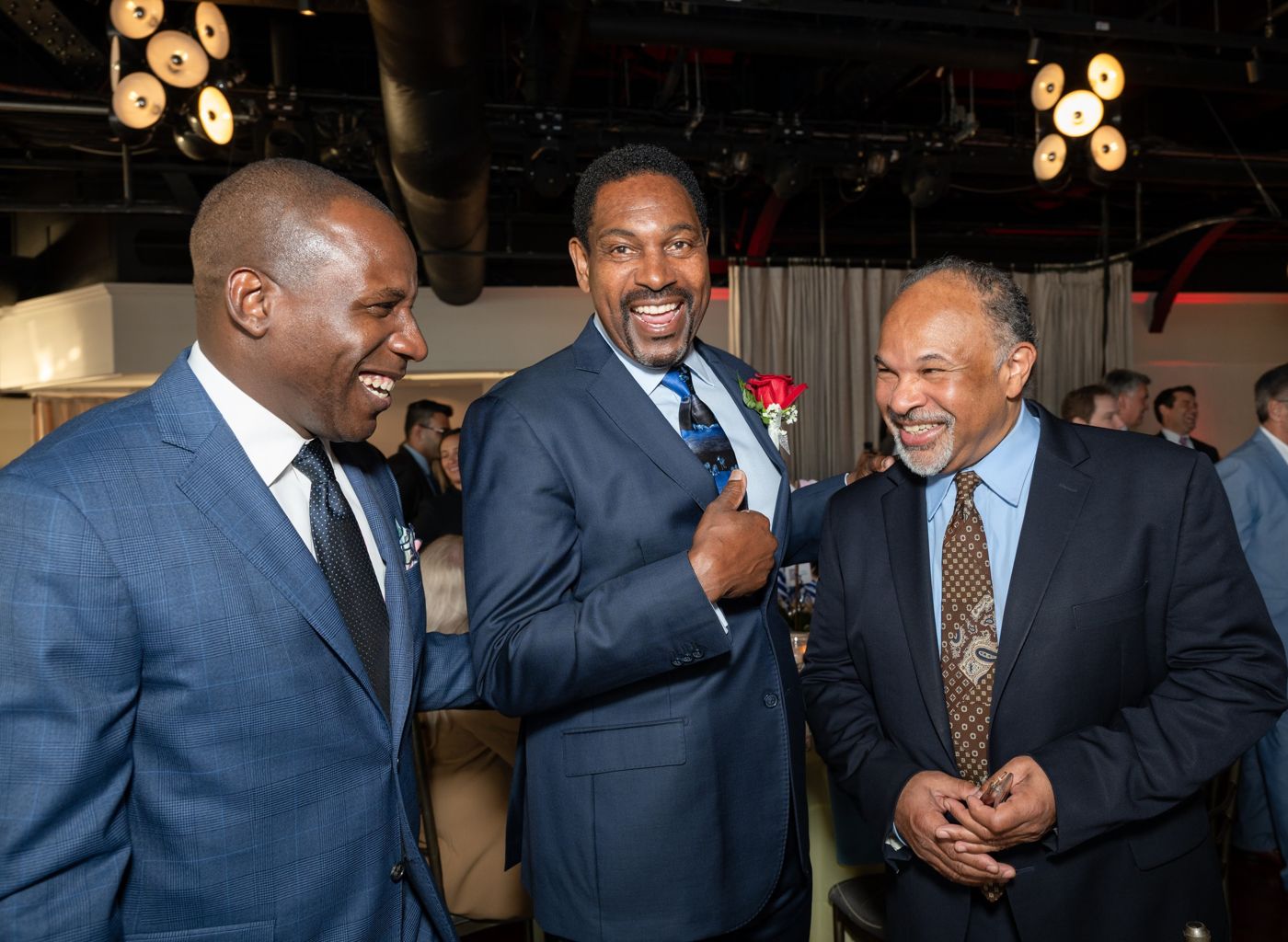
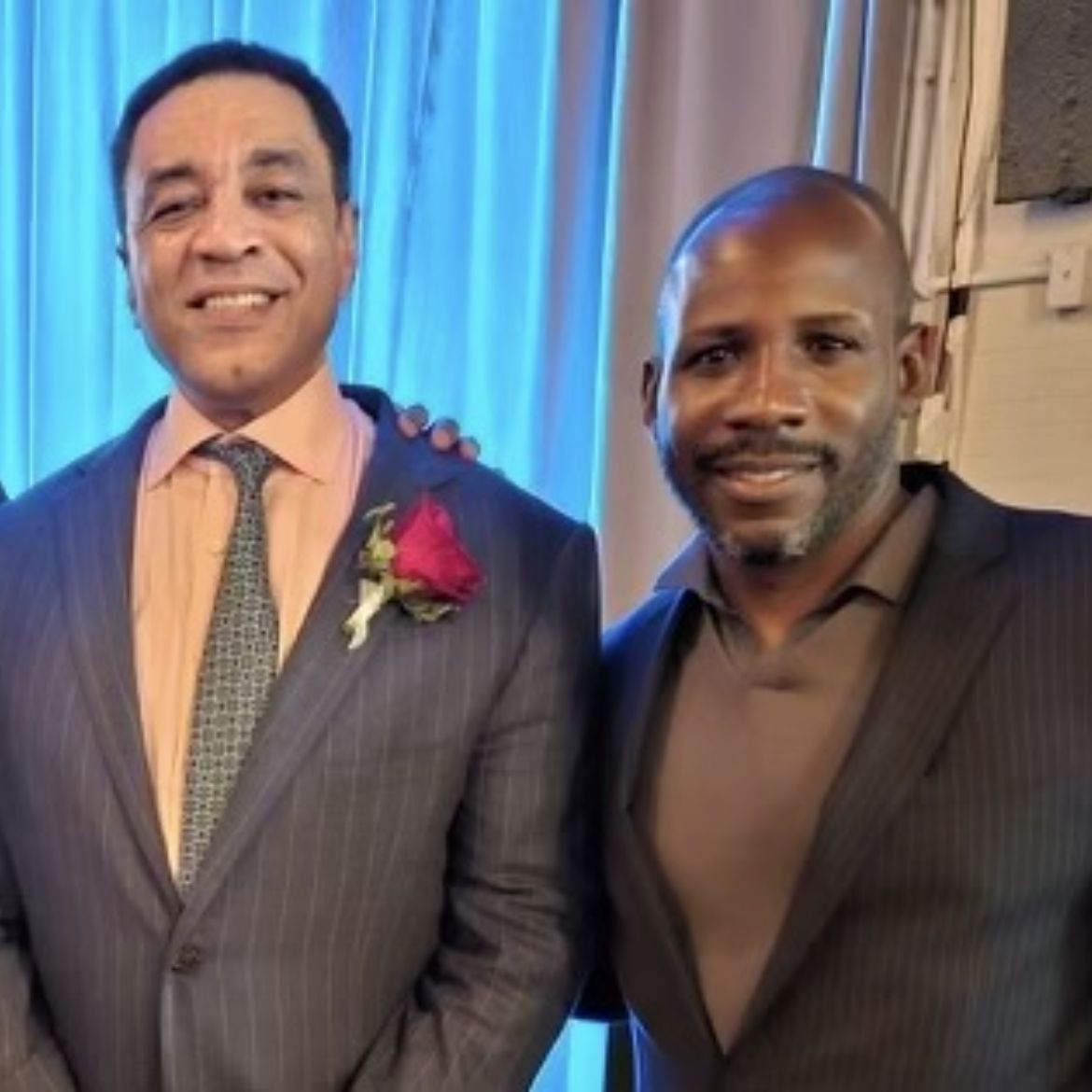
In a statement from S. Clark Production Enterprises, Clark said: “Paul Robeson’s life reminds us that an artist’s voice can reach far beyond the stage. His courage, talent, and commitment to human dignity left an indelible mark on history. Through this production, we want audiences to experience not only the power of his artistry, but also the significance of his legacy.”
The voice: Kevin Maynor
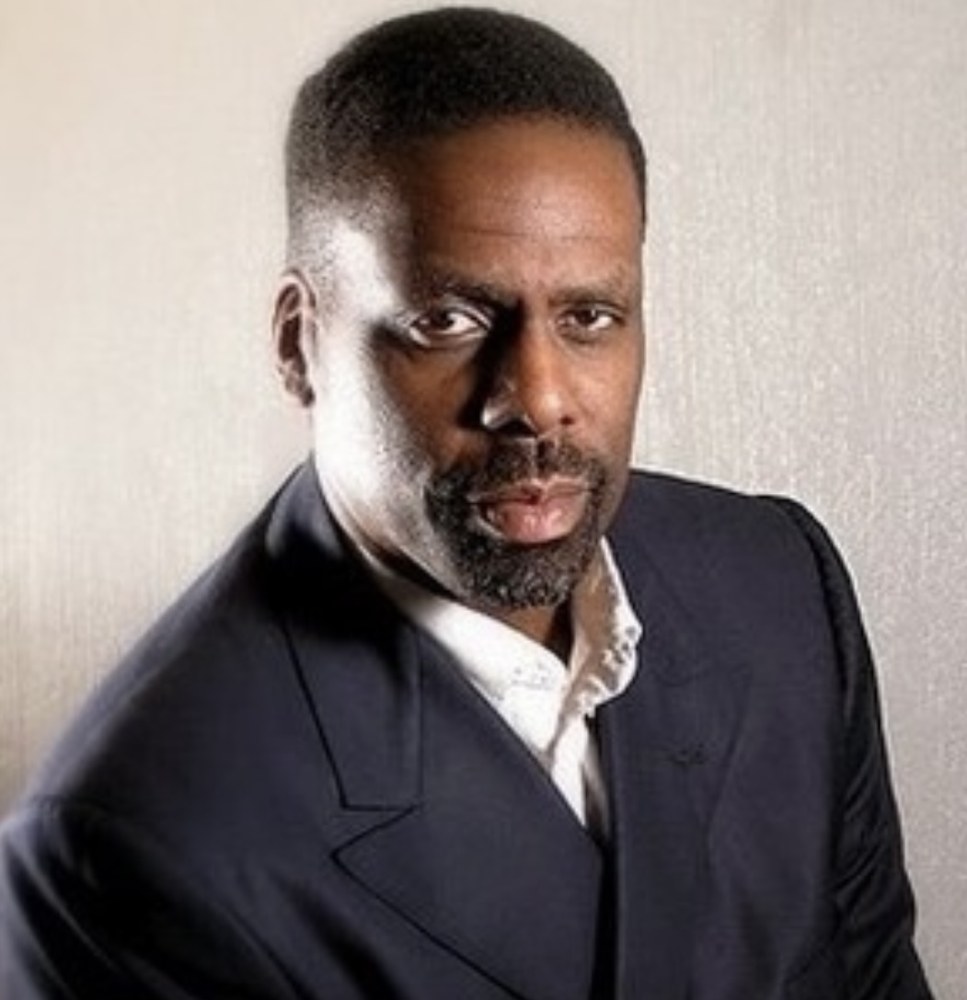
To carry Robeson’s voice, Clark chose a voice big enough to hold it. The internationally acclaimed bass Kevin Maynor stars in the one-man show, bringing Robeson’s life, music and legacy to the stage through song, spoken word and reflection. Fanfare magazine, reviewing Maynor’s recording Paul Robeson Remembered, ranked his voice with Robeson’s own and with the greatest basses of the century.
Kevin Maynor in Migration Rhapsody
A taste of what’s coming to White Plains: Maynor in a past production.
Paul Robeson: A Night of Elegance
An evening of opera, history and inspiration, starring Kevin Maynor
When: Thursday, February 4, 2027. Doors open at 6:30 p.m. and the performance begins at 7:00 p.m. sharp.
Where: White Plains Performing Arts Center, 11 City Place, White Plains, NY
Tickets: $60 to $150. Groups buying more than 10 tickets in the same seating section save 10%. Schools, churches, community groups and businesses are especially invited.
Media inquiries: S. Clark Production Enterprises, SClarkProductionsEnterprises@gmail.com
Get TicketsThe Harlem Times is a media sponsor of this production. Historical photographs are in the public domain unless noted. Share this story and tag us: @HarlemTimesNews on X and @theharlemtimes on Instagram.