
By THT World Desk
“Haba na haba hujaza kibaba.” Little by little fills the measure.
Swahili proverb
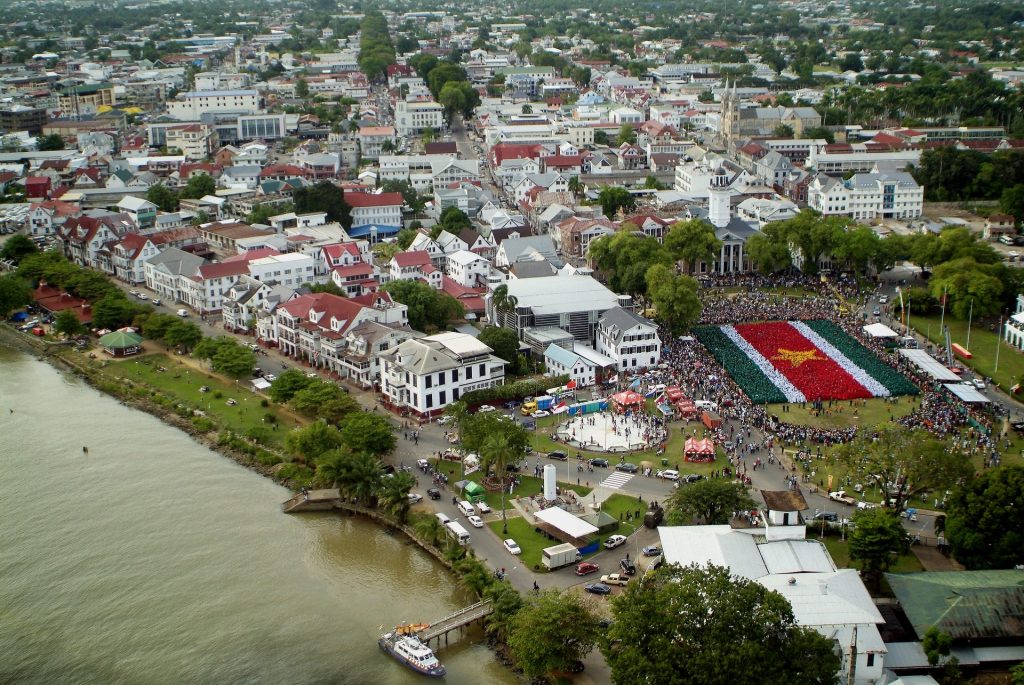
From The Harlem Times: On the northern shoulder of South America sits a country where more than 90 percent of the land is still forest, where the capital’s wooden inner city is a UNESCO World Heritage Site, and where no single ethnic group forms a majority. African, Indigenous, Indian, Javanese, Chinese, Jewish and European roots all live at the same table. Suriname is also on the edge of an oil era, with first oil from the GranMorgu project expected in 2028.
Oil can arrive like a flood. The Swahili proverb above counsels another way: wealth that lasts is gathered measure by measure, in farms, forests, skills and small businesses. That is the path Suriname’s Ambassador to the United States, Marlon Mohamed-Hoesein, describes. The Harlem Times asked him five questions. His answers follow in full.
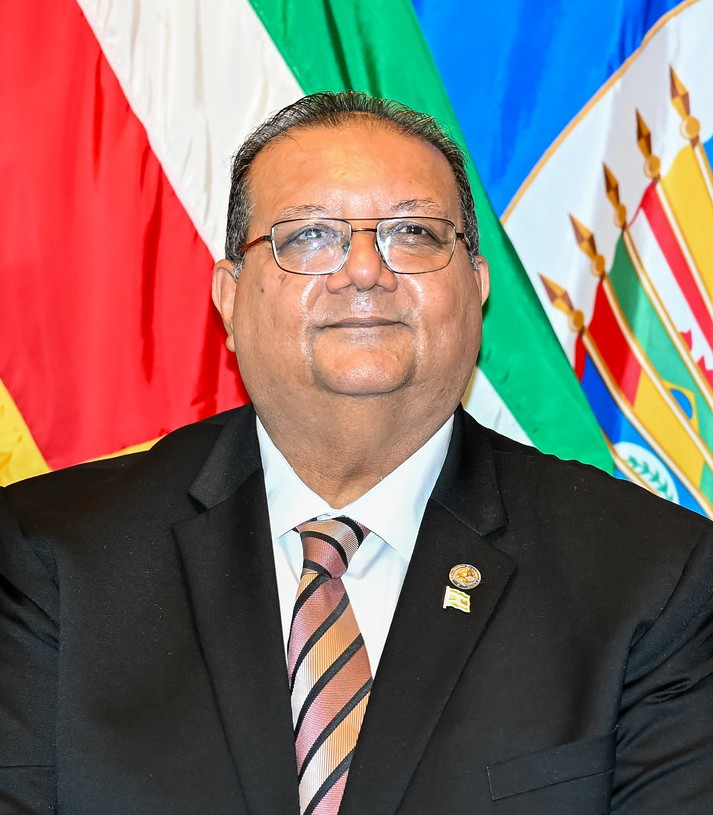
The Harlem Times: What are the developments in Suriname today that the diaspora should know about?
Ambassador Mohamed-Hoesein: Suriname is entering an important new chapter in its development. One of the most significant developments is the emergence of our offshore oil and gas industry. The GranMorgu project in Block 58, led by TotalEnergies and APA Corporation, is moving forward, with first oil expected in 2028. Various other international companies are also exploring and developing offshore opportunities.
This creates prospects not only in the energy sector, but also in infrastructure, ports, transportation, logistics, construction, hospitality, technology and professional services.
The main objective for Suriname is to use the opportunities created by the energy sector to build a stronger, more diversified and inclusive economy, while strengthening and further developing key sectors such as Agriculture, tourism, forestry, fisheries, mining and digital services.
We want economic growth to translate into jobs, skills, better infrastructure and improved opportunities for the population. The diaspora should know that Suriname is changing with plenty of new opportunities.
The Harlem Times: What opportunities are there for diaspora travel, trade and investment?
Ambassador Mohamed-Hoesein: There are opportunities in all three areas, and I would encourage the diaspora to look at Suriname not only as a place to visit, but also as a place to build partnerships and do business.
For travel, Surinamese Americans can rediscover their roots, bring their children and grandchildren to experience the country, and encourage friends and colleagues to visit. Tourism offers opportunities in eco-lodges, hotels, restaurants, tour operations, river excursions and cultural experiences.
For trade, there is room to expand the exchange of Surinamese agricultural products, food, beverages, wood products, cultural goods and creative services. Diaspora entrepreneurs can help introduce Surinamese products to markets in New York and elsewhere in the United States.
For investment, the possibilities include energy services, port and logistics infrastructure, housing, agriculture, agro-processing, tourism, ICT and professional services. The diaspora also has something extremely valuable to contribute beyond capital: expertise, business networks, technology and knowledge of the American market.
I would encourage interested members of the diaspora to connect with Suriname’s investment agency SITA and to explore opportunities with established local partners. The aim should be to create businesses that generate employment and lasting value in Suriname. Contact can be made with the Embassy of Suriname in Washington D.C. through amb.washington@mofa.gov.sr.
The Harlem Times: What should a first-time visitor to Suriname experience?
Ambassador Mohamed-Hoesein: A first-time visitor should experience the remarkable combination of nature, culture, history and hospitality that makes Suriname unique.
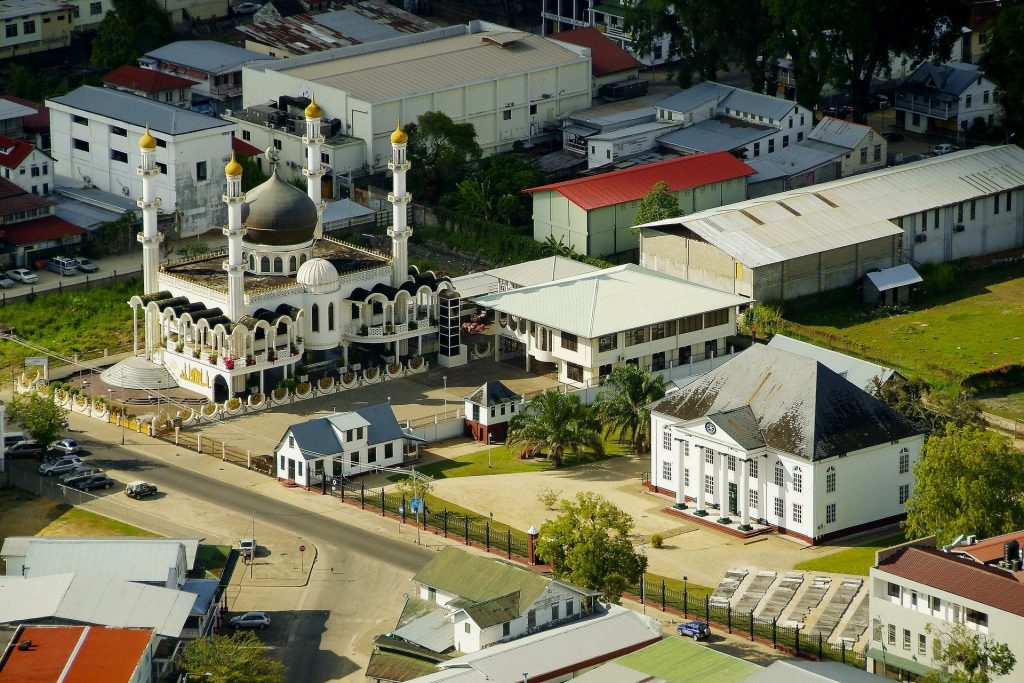
I would begin in Paramaribo, particularly its historic inner city, which is recognized as a UNESCO World Heritage Site. Visitors should explore its wooden architecture, historic buildings, markets, museums and places of worship. They should also experience our cuisine. Suriname’s food reflects the influences of Indigenous, African, Indian, Javanese, Chinese, Jewish and European communities. It is one of the best ways to understand our multicultural society, in which no single ethnic group forms a majority.
But Suriname is much more than its capital. I would encourage visitors to travel to the interior, experience the rainforest, take a river journey, visit nature reserves and learn about the traditions and way of life of Indigenous and Maroon communities, with respect for their cultures and under the guidance of local communities.
Suriname offers something different from conventional tourism. It is a destination for people who appreciate nature, authenticity, cultural diversity and meaningful experiences. More than 90 percent of the country remains forested, making its natural environment one of its greatest assets. Suriname also makes a significant contribution to global climate mitigation, as its forests absorb more carbon dioxide than the country emits.
The Harlem Times: How can Harlem and Suriname build closer ties?
Ambassador Mohamed-Hoesein: I believe Harlem and Suriname can build a meaningful relationship through culture, education, business and people-to-people connections.
Harlem has a rich history of African American culture, entrepreneurship, music, literature and community leadership. Suriname, too, has a remarkable cultural heritage shaped by African, Indigenous, Asian and European influences. There are opportunities to bring these communities closer together and learn from one another.
We could develop cultural exchanges involving Surinamese and Harlem artists, musicians, writers and cultural organizations. We could also encourage exchanges between schools, universities and young professionals, creating opportunities for students to learn about each other’s histories and societies.
There is also a business dimension. Harlem entrepreneurs and business associations could establish connections with Surinamese businesses in tourism, agriculture, food production, creative industries and trade. Business forums and trade missions could help turn these connections into practical partnerships.
I would also welcome closer cooperation between community organizations, churches, cultural institutions and diaspora associations. We should build relationships that go beyond an annual celebration and create sustained cooperation throughout the year.
The objective should be to connect our people, our institutions and our economic opportunities. Harlem and Suriname have much to share.
The Harlem Times: What message would you send to the Surinamese and Caribbean community in New York?
Ambassador Mohamed-Hoesein: My message is simple: Suriname is your home, regardless of how many years you have lived abroad or whether you were born in Suriname or in the United States. Your connection to the country does not have to be limited to memories, family visits or cultural celebrations. It can also be expressed through knowledge, business, education, tourism and investment.
Suriname is approaching an important moment in its history. The development of the oil and gas sector offers new opportunities, but our future cannot depend on oil alone. We want to build a diversified economy, create opportunities for our young people and ensure that development benefits the entire population.
The diaspora has an important role to play. You have experience, professional skills, international networks and entrepreneurial energy. You can help open doors for Surinamese businesses, introduce new ideas and technologies, promote tourism and encourage investment.
I also want to recognize the contribution of the Caribbean community in New York. Our countries share history, culture, family connections and many common interests. We are one Caribbean family. Let us celebrate the bonds that unite us as Caribbean people and further deepen our cooperation.
I invite you to visit Suriname, bring your families, explore its opportunities and remain engaged in its development.
Let us turn our shared heritage into a shared future. Suriname welcomes you, and there is a place for every member of the diaspora in the country’s next chapter.
From The Harlem Times: To explore travel, trade or investment, contact the Embassy of the Republic of Suriname in Washington at amb.washington@mofa.gov.sr. Share this story and tag us @HarlemTimesNews on X and @theharlemtimes on Instagram.