
Country of the Week · The Harlems of the World Travel Guide
“Rain does not fall on one roof alone.” — African proverb
With crude prices soaring this year, all eyes in the oil world have turned back to the Atlantic coast of Africa, and to Angola in particular. Sub-Saharan Africa’s second-largest oil producer, after Nigeria, is enjoying a windfall, attracting billions in new investment and building the refineries it has gone without for half a century. The question for Angolans, and for a diaspora watching closely, is whether this boom will be different from the last one.
Why it matters
Uptown: Higher oil prices show up at New York gas pumps and in heating bills, and Angola is one of the producers helping supply a nervous world market.
Across America: A U.S. agency has backed Angola’s Lobito rail corridor with a $553 million loan, part of a push to link African minerals to Atlantic shipping.
Around the world: Angola left OPEC at the start of 2024 to set its own course. Its choices now are a test for every oil-rich African nation.
A windfall, by the numbers
Angola pumped an average of about 1.03 million barrels a day in the first nine months of 2026, according to figures from the National Agency for Petroleum, Gas and Biofuels (ANPG) reported by Expansão. That was flat from last year and a little short of the government’s 1.05 million target.
The price did the heavy lifting. Angolan crude averaged about $85 a barrel over that period, up from $71, and oil tax revenue rose 16 percent to roughly $8.6 billion. By October, the international benchmark, Brent, was pushing toward $116 a barrel as conflict in the Middle East rattled markets, Bloomberg reported.
The money is coming
- TotalEnergies, Angola’s largest operator, producing about 450,000 barrels a day, said in September that it and its partners plan to invest $10 billion in Angola over the next five years. Chief Executive Patrick Pouyanné made the announcement at an industry conference in Luanda.
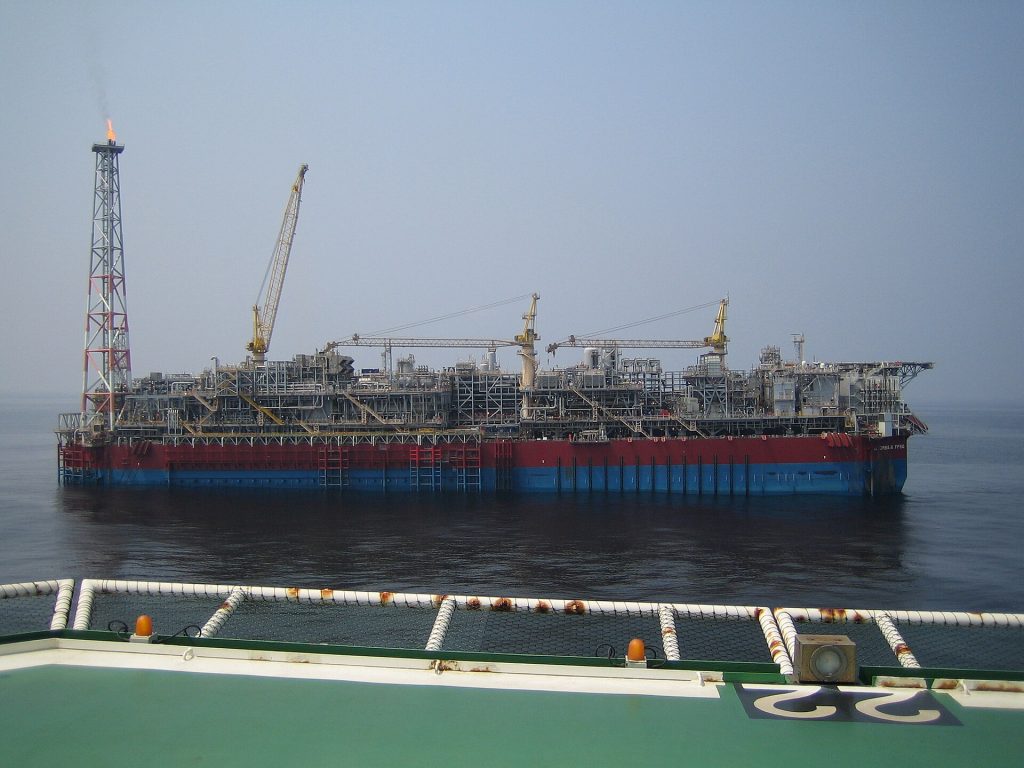
- Kaminho, a $6 billion deepwater project about 100 kilometers offshore in the Kwanza Basin, is expected to start producing in 2028.
- New fields such as Begónia, CLOV Phase 3 and the Agogo floating production vessel came online in the second half of 2025, each designed to add about 30,000 barrels a day.
- New exploration: TotalEnergies and ExxonMobil signed new offshore exploration licences for Blocks 17 and 32.
Refining at home, at last
For decades, Angola exported crude and imported much of its fuel. That is changing. The Cabinda refinery, the country’s first new refinery in more than 50 years, began production this year at 30,000 barrels a day, with plans to double that. Owned 90 percent by the investment firm Gemcorp and 10 percent by the state oil company Sonangol, it is the first step. A far larger Lobito refinery, planned at 200,000 barrels a day, is under development on the west coast.
Beyond oil
Angola’s leaders know oil will not last forever. The World Bank, which approved a $1.1 billion support package in March, says output is in long-term decline and that non-oil industry is now driving growth. The Lobito Corridor, a rebuilt railway linking copper and cobalt mines in Zambia and Congo to the port of Lobito, is the flagship of that shift. Oil-backed debt to China has also fallen to about $6.8 billion, from a peak of $16.3 billion in 2020.
The Harlem Times View: Make This Boom Count
The reporting above is drawn from ANPG data, Bloomberg, TotalEnergies and other published sources listed below. What follows is the view of The Harlem Times.
Angola has seen oil booms before, and too often the wealth flowed out faster than it flowed to its people. This time, the refineries, the rail corridor and the push to diversify offer a different path. The diaspora can help: as travelers to Luanda, as investors, and as partners who keep asking where the money goes.
The Harlem Times has invited Angola’s Embassy, its Consulate General in New York and its Mission to the United Nations to share their vision in our Africa’s Rise series. Our door remains open.
Sources: ANPG figures via 360 Angola; Offshore Engineer; Industrial Info; The Rio Times; Engineering News; Bloomberg.